



The Great Erasure of the House of Wisdom
The history books don’t just omit names. They curate a specific kind of silence.
Take the narrative of the “Dark Ages.” We are taught that European intellect froze until the Renaissance. But in 830 CE, Baghdad was the center of the known world. The Bayt al-Hikma, or House of Wisdom, wasn’t just a library. It was a state-funded research engine where scholars like Hunayn ibn Ishaq translated Galen’s On the Natural Faculties from Greek into Syriac and Arabic.
This wasn’t a passive preservation of old texts. It was an aggressive expansion of knowledge. While Europe struggled with literacy, Al-Khwarizmi was writing Al-Kitab al-mukhtasar fi hisab al-jabr wa-l-muqabala in 820 CE, effectively inventing algebra.
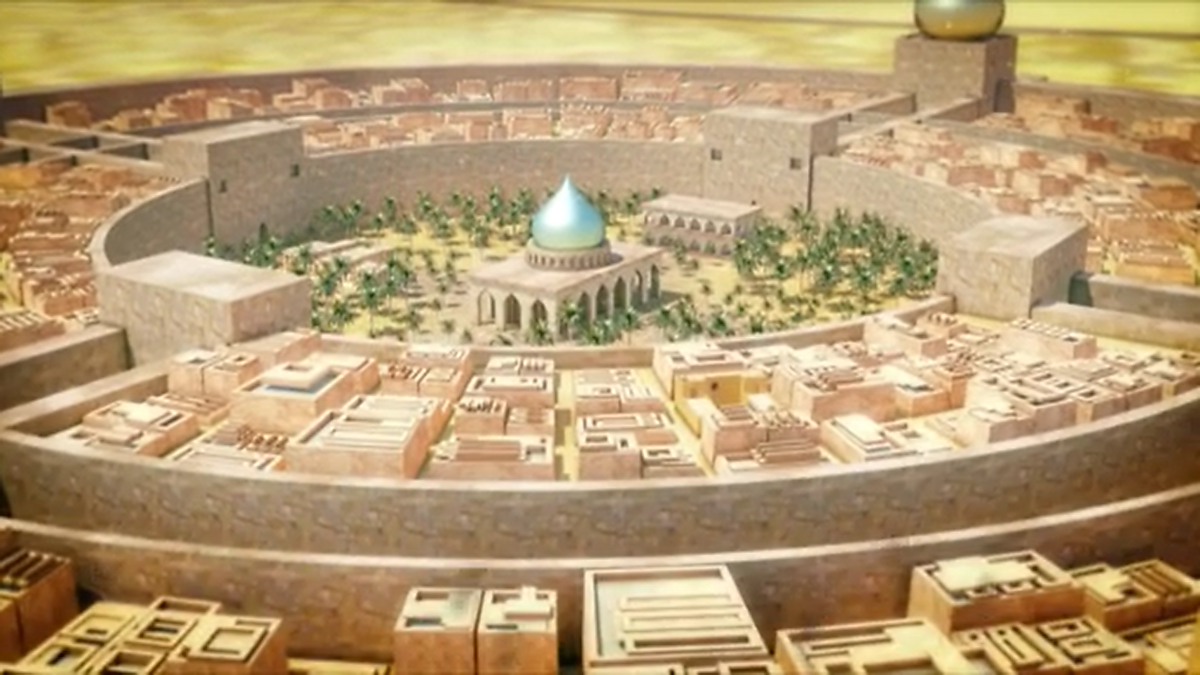
Why is this absent from the standard curriculum? Because admitting that the foundations of modern mathematics and medicine were laid in 9th-century Iraq disrupts the “West-centric” timeline of progress. It transforms the Renaissance from a sudden awakening into a delayed inheritance. We aren’t missing a few dates. We are missing the bridge that connected antiquity to the modern world.
The erasure didn’t happen by accident. It happened by design.
Why things you were taught that are wrong history science persist in textbooks
The Mongols sacked Baghdad in 1258 CE, dumping thousands of manuscripts from the House of Wisdom into the Tigris. Legend says the river ran black with ink. For decades, this image served as a convenient shorthand for historians to claim that global knowledge vanished until the European Renaissance.
It is a calculated error. The ink-black river became a symbol of “extinction” to justify a European monopoly on progress. By framing 1258 CE as the end of science, the West could claim the “Scientific Revolution” was a sudden, internal miracle rather than a debt paid to the East.
The center of gravity simply shifted. Between 929 and 1031 CE, the Caliphate of Córdoba reached its zenith, while Cairo’s Al-Azhar became a global hub by 970 CE. Ibn al-Haytham had already dismantled Greek optics in Kitab al-Manazir long before the West awoke.
This erasure persists in standards like the Common Core State Standards for History/Social Studies, which often skip from the fall of Rome to the 1400s. By omitting the 8th through 13th centuries, these curricula create a vacuum.
The narrative of the Dark Ages wasn’t a description of reality, but a tool used to claim a monopoly on intellectual progress.
The Myth of the Dark Ages and the Córdoba Enlightenment
Córdoba reached a population of 500,000 by 950 CE. London remained a fragmented settlement of roughly 10,000 people. Meanwhile, Córdoba operated 70 libraries and paved street lighting. This wasn’t accidental. It was a state-funded intellectual project. Scholars like Ibn Rushd analyzed Aristotle’s Metaphysics with a rigor unseen in the north. During this same period, the scriptoria of monasteries like Monte Cassino focused primarily on liturgical preservation. They often lost the technical depth of Greek mathematics.
The “Dark Ages” narrative is a curated fiction, one of the things you were taught that are wrong history science. It frames the Renaissance as a sudden spark. It is not a deliberate relay race of knowledge. This transmission began with the Translation Movement in 8th-century Baghdad. Scholars at the House of Wisdom translated Ptolemy’s Almagest into Arabic. These texts then moved westward via trade routes and diplomatic envoys. They reached the libraries of Al-Andalus.
The perceived “darkness” of the early Middle Ages was a regional European phenomenon, not a global intellectual void.
By erasing the Córdoba Enlightenment, textbooks suggest knowledge was simply lost and then rediscovered, repeating things you were taught that are wrong history science. They ignore the scholars who curated, critiqued, and expanded that knowledge. This happened for six hundred years before the first European universities ever opened.
How things you were taught that are wrong history science protect a specific narrative
The translation movement in Toledo, Spain, shifted the intellectual center in 1150 CE. Scholars like Gerard of Cremona spent years translating Arabic texts into Latin. They did not find lost Greek wisdom; they found the expanded commentaries of Al-Farabi and Ibn Sina. Consider the physical reality of these texts: the “lost” Aristotle didn’t reappear as a pristine Greek scroll, but as a Latin translation of an Arabic translation, often smelling of the leather and ink of Baghdad. Labeling this era “The Dark Ages” creates a vacuum. It suggests Europe woke from a slumber instead of acknowledging that Islamic scholarship woke it.
This erasure is a strategic choice. If the transition to the Renaissance was a relay race where the baton passed from Baghdad to Córdoba to Florence, the Western achievement is not solitary. It is a shared human project. This is why incorrect history and science persist in curricula to protect the idea of a linear, Eurocentric progression of logic.
The perceived gap in knowledge wasn’t a lack of books, but a selective memory of who wrote them.
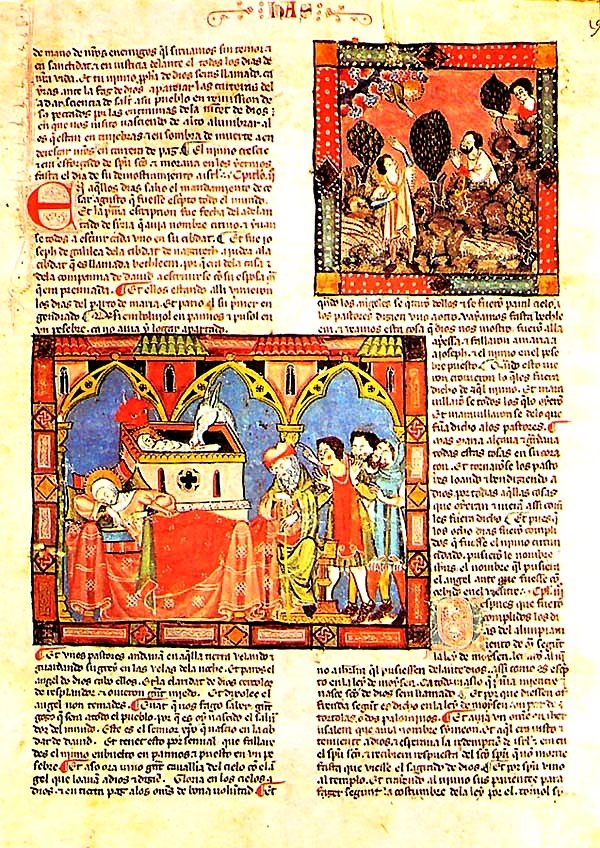
Ignoring the 12th-century bridge reinforces a fiction. It pretends the Enlightenment happened in a vacuum and ignores the actual history of science to maintain a specific cultural ego.
The Hidden Architects of the Scientific Method
In 1021 CE, Ibn al-Haytham stood in a darkened room in Cairo. He observed light pass through a pinhole. He didn’t just watch. He spent years measuring angles of rays to prove light travels in straight lines. He documented these findings in Kitab al-Manazir (Book of Optics). He insisted that a hypothesis must be provable through repeatable experiments.
This was the birth of the scientific method. Yet, standard curricula often skip from the Greeks to the 17th-century “Scientific Revolution.” They credit figures like Francis Bacon or René Descartes with inventing empirical rigor. This creates a false intellectual gap. It suggests a sudden European epiphany rather than a continuous chain of discovery.
[Image: Diagram of Ibn al-Haytham’s camera obscura experiment in Cairo]
By omitting Kitab al-Manazir, textbooks frame critical thinking as a regional Western invention. This isn’t a simple mistake; it is a historiographical choice. The foundations of modern physics were laid in the Islamic world. This happened centuries before the Enlightenment. When we accept this curated timeline, we accept a version of human achievement. This version ignores who actually built the foundation.
Who benefits when we forget where knowledge actually began?
The narrative of a “Dark Age” serves a specific purpose: it frames the European Renaissance as a spontaneous miracle. By erasing the 8th-century translation movement in Baghdad, the record suggests genius is a Western birthright, reinforcing things you were taught that are wrong history science.
This isn’t a mere oversight. It is a strategic omission. Hunayn ibn Ishaq meticulously translated Galen’s On the Natural Faculties into Arabic around 830 CE. By ignoring this, we maintain a hierarchy of innovation. This erasure benefits institutions that equate “modernity” exclusively with Western identity. These institutions cast the Islamic world as a mere warehouse for Greek ideas rather than an engine of discovery.
The reality was a synthesis. In 1021 CE, Ibn al-Haytham published Kitab al-Manazir (Book of Optics). He didn’t just preserve Euclid’s Optics; he dismantled its core assumptions. He discovered the camera obscura and the physics of light. This work directly enabled Roger Bacon’s work in the 13th century. Without Ibn al-Haytham, the scientific method lacked its primary blueprint for empirical testing, highlighting more things you were taught that are wrong history science.
By scrubbing these names, we protect the myth of the “lone Western genius.” We trade a complex, global truth for a comfortable, regional lie
Frequently Asked Questions
Q: What are some common things you were taught that are wrong in history and science?
A: Many things you were taught that are wrong in history and science involve the “Dark Ages.” We are often told Europe entered a total intellectual void after Rome fell. In reality, the Islamic Golden Age preserved and expanded Greek knowledge. While Europe struggled, scholars in Baghdad’s House of Wisdom were refining algebra and optics. This gap in our education suggests that “darkness” was a regional experience, not a global one.
Q: Why does it matter if these historical and scientific myths are wrong?
A: Correcting things you were taught that are wrong in history and science changes who we credit for modern progress. When we ignore the contributions of non-Western civilizations, we create a distorted view of human intelligence. It suggests innovation is a trait of one culture rather than a collective human effort. Understanding the true origins of science fosters a more accurate, humble perspective on how knowledge actually evolves over time.
Q: Is it true that humans only used ten percent of their brains?
A: This is one of the most persistent things you were taught that are wrong in science. Neurological imaging shows that nearly every part of the brain has a known function. There is no “silent” 90% waiting to be activated. While we don’t use every neuron simultaneously, the idea of untapped mental reserves is a myth. It persists because it sells the fantasy of hidden, superhuman potential.
Q: Who actually invented the scientific method?
A: You were likely taught that the scientific method began with the European Renaissance, but this is among the things you were taught that are wrong in history. Ibn al-Haytham, an 11th-century scholar, pioneered the experimental method in his work Kitab al-Manazir. He insisted on repeatable experiments to prove theories, centuries before the Enlightenment. His approach to optics shifted science from abstract philosophy to empirical evidence.
Q: Why do textbooks keep teaching these inaccuracies?
A: Many things you were taught that are wrong in history and science persist because of “narrative smoothing.” Textbooks often simplify complex timelines to create a linear story of progress. It is easier to teach a story of “Greek genius → Dark Ages → European Enlightenment” than to explain the intricate exchange of knowledge between Persia, India, and the Arab world. Simplicity is often prioritized over accuracy in mass education.

