


Gold Can Buy a Kingdom, But It Can Also Crash an Economy
In 1324 CE, Mansa Musa arrived in Cairo with 60,000 people. He moved a city. His entourage included 12,000 servants in Persian silk, each carrying a gold staff. Musa brought 30,000 pounds of gold and distributed it so aggressively that the metal’s value plummeted. Egypt and the Mediterranean suffered inflation for twelve years. In a rare historical irony, the “richest man in history” accidentally impoverished the very people he tried to bless.
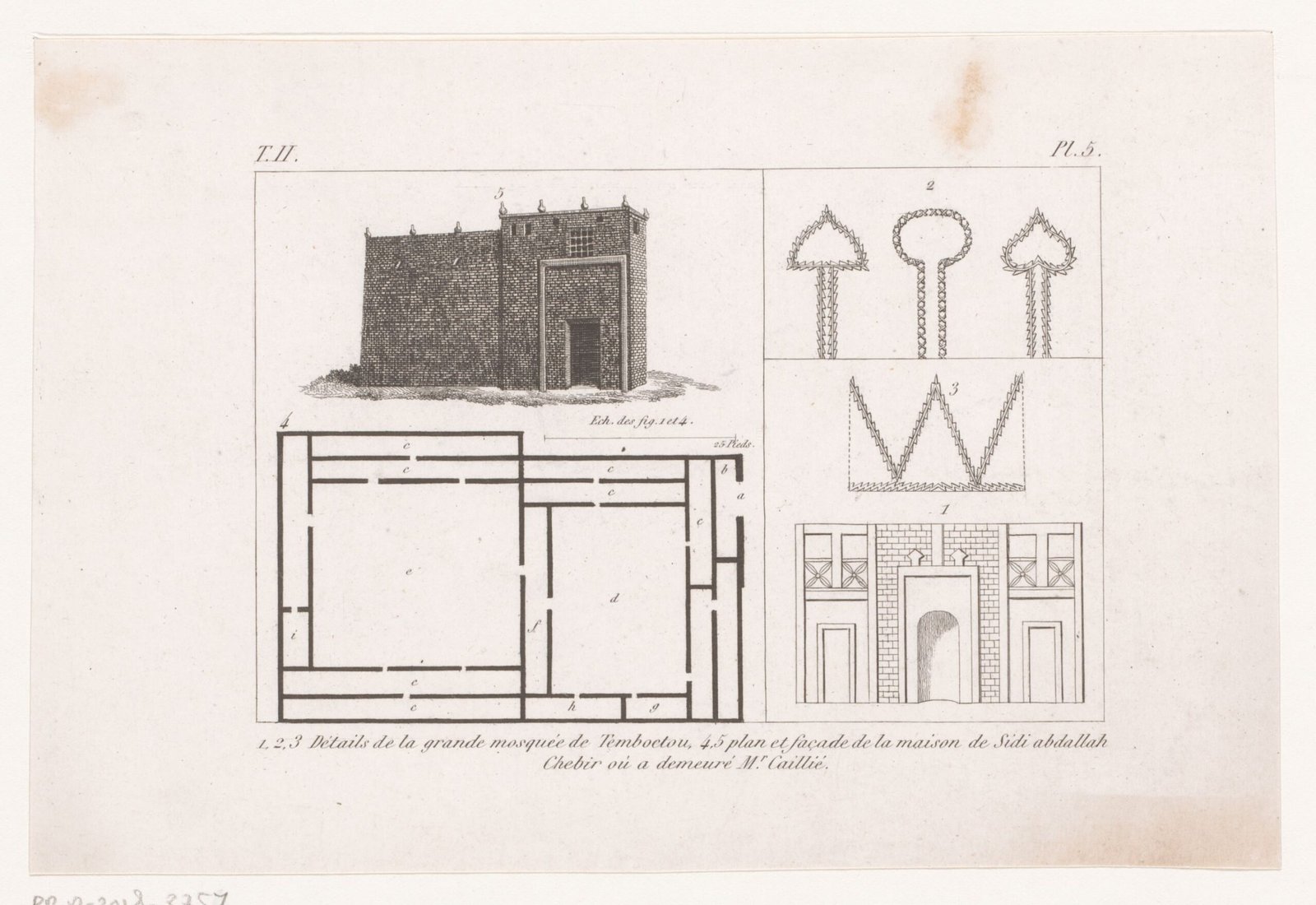
Musa used this wealth to transform Timbuktu into a global intellectual hub. He commissioned the architect Abu Ishaq al-Sahili to build the Djinguereber Mosque in 1327 CE. This sparked a scholarly migration. Timbuktu University became a sanctuary for experts like the astronomer Al-Zarqali, whose influence reached the Sahel. They studied The Almagest and advanced jurisprudence, creating a sophisticated state long before colonial narratives labeled Africa a “dark continent.”
His fortune was a tool, not just a hoard. This history vanished because 19th-century European historiography required a void. To justify colonization, the West had to erase the memory of a black African empire that once dictated the global economy.
Which part of this forgotten history surprised you most? Share your thoughts.
The Logistics of a 60,000-Person Caravan
Twelve thousand servants marched in line, each carrying a four-pound gold bar. By 1324 CE, Mansa Musa assembled a procession that stretched for miles across the Sahara toward Cairo. He traveled with 60,000 people, including 12,000 heralds dressed in Persian silk.
Managing this scale required coordination that stunned the Mamluk administration. Musa did not rely on chance. According to the historian Al-Umari in his work Masalik al-Absar, the caravan operated via a sophisticated relay system. Musa’s agents pre-positioned grain and water at established oases and wells months before the departure. This logistical network turned the Sahara from a barrier into a managed corridor.
The sheer volume of people made the caravan larger than London or Paris in 1324. When Musa arrived in Cairo, the sudden influx of gold crashed the local economy. He distributed so much bullion that the price of gold plummeted. It took over a decade for the Egyptian markets to recover from the inflation.
The scale of the caravan was so immense that it functioned as a moving capital, shifting the center of gravity of the known world.
Musa proved that wealth is useless without the infrastructure to move it.
How Mansa Musa Richest Person in History Redefined West African Power
By 1312 CE, Musa I controlled the Bambuk and Bure goldfields. He secured a monopoly over the trans-Saharan trade. This wealth wasn’t just a hoard; it was a geopolitical weapon. During his 1324 CE hajj to Mecca, Musa distributed gold in Cairo. This triggered a massive devaluation of the metal. The Egyptian economy suffered from gold inflation for over a decade. This proved a West African ruler could destabilize Mediterranean markets from thousands of miles away.
Musa didn’t just spend; he imported intellectual infrastructure. He commissioned the Andalusian architect Abu Ishaq al-Sahili to design the Djinguereber Mosque in 1327 CE. Al-Sahili replaced traditional mud-brick with burnt bricks and a conical minaret. This wasn’t a mere aesthetic choice. It was a political pivot toward permanence and urban sophistication. Mali was no longer a collection of villages. It was a centralized state with an enduring architectural legacy. By funding the Sankore Madrasah, Musa transformed Timbuktu into a sanctuary for scholars. They studied The Muqaddimah and other seminal texts. This shifted the region’s identity from a trade outpost to a global center of jurisprudence.
The gold of the Mali Empire was not merely for luxury; it was a tool for statecraft and the pursuit of global knowledge.
This investment redefined power. Mansa Musa demonstrated that African wealth could purchase more than jewelry. It bought the prestige of the Islamic world’s finest minds. This created institutional stability. Consequently, the courts of Europe and North Africa acknowledged Mali as a peer.
Cairo 1324: The Moment Gold Became Worthless
Al-Umari detailed the wreckage in his work Masalik al-Mamalik. In 1324 CE, Mansa Musa entered Cairo with thousands of attendants and tons of gold. He didn’t just spend; he distributed gold as gifts to the poor and the elite. This flooded the Mamluk markets, causing the price of gold to crash.
The collapse wasn’t a general dip. It hit the dinars specifically. Al-Umari noted that the gold dinar lost value against the silver dirham for over a decade. This triggered a spike in the cost of wheat and basic grains, as merchants demanded more gold for the same amount of food.
Calling this the “first” economic collapse is a stretch—the Roman Empire faced currency debasement centuries earlier. But it was a rare instance of a single individual breaking a regional market. The Egyptian economy didn’t just “struggle”; the gold market remained depressed until roughly 1334 CE.
“The gold of the Malians was so abundant that it lowered the price of gold in Egypt for twelve years.” — Al-Umari, Masalik al-Mamalik
Musa treated gold as a gift. The market treated it as a commodity. He left Cairo as a legend, but he left the Mamluk traders in a decade-long financial hole.
Beyond the Wealth: The Intellectual Ambitions of the Mali Empire
Timbuktu was not always a city of books. In 1325 CE, Mansa Musa returned from his hajj with the Andalusian architect Abu Ishaq al-Sahili. Musa commissioned al-Sahili to transform the settlement into a center of learning. He funded the Djinguereber Mosque using burnt bricks and limestone to repel the desert heat.
This was not merely about faith. Mali’s gold funded Arabic manuscripts imported from Cairo and Baghdad. The Tarikh al-Sudan, a 17th-century chronicle, records Musa’s obsession with scholarship. He viewed texts as superior to bullion, often paying scribes in gold to relocate to the Sahara’s edge. He established the Sankore Madrasah, a center of higher learning. While modern historians often call this “Timbuktu University,” it was actually a decentralized network of independent colleges. At its peak, this network supported 25,000 students. They studied astronomy and Islamic law, rivaling the collections at the House of Wisdom in Baghdad.
Musa viewed gold as a tool for stability, but knowledge as the only way to ensure his empire survived the shifting sands of the Sahara.
Musa focused on intellectual growth. He used the gold of the African empire to fund a global intellectual renaissance.
Why the World Stopped Looking Toward Timbuktu
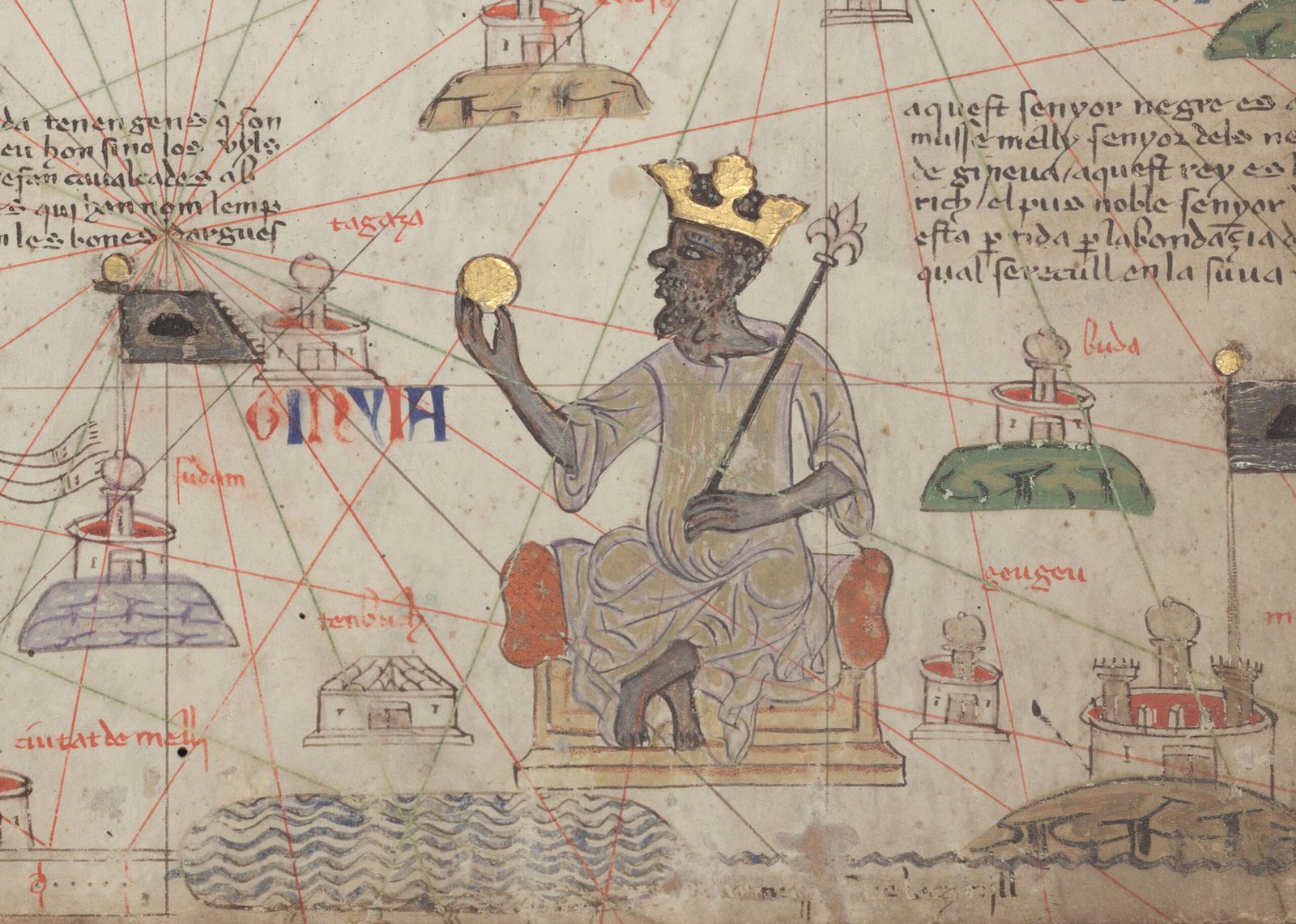
By 1337 CE, Europe knew of the Mali Empire. Abraham Cresques drew Mansa Musa holding a golden orb in the 1375 Catalan Atlas. This map showed Europe that a wealthy civilization existed in West Africa. This visibility created a problem. The wealth of Mansa Musa, often called the richest person in history, attracted invaders.
Timbuktu was a center for the Sankore Madrasah, where scholars studied astronomy and law. In these libraries, manuscripts were treated as the highest form of currency; a rare book was often worth more than a herd of cattle. By the end of the 14th century, however, global interest shifted from learning to extraction. Mediterranean powers focused on the source of the gold.
The world stopped seeing Mali as a center of learning and began viewing it as a vault to be raided.
When Moroccan forces invaded the Songhai Empire in 1591 CE, the schools collapsed. Soldiers looted libraries and scholars fled. The world ignored the universities of the Sahel to count the gold that had made Mansa Musa the richest person in history.
The Erasure of Mansa Musa Richest Person in History from Western Textbooks
The Catalan Atlas of 1350 CE showed Mansa Musa holding a golden scepter, placing him on European maps. For centuries afterward, Western schools treated the Mali Empire’s wealth as a footnote or a myth. This was a choice of narrative.
The fact that a sophisticated African empire ran a gold economy contradicted the reasons given for later colonial expansion. If the world accepted that Mansa Musa, the richest person in history, led a literate and urbanized society, the “dark continent” myth would fail. Textbooks focused on the Mediterranean and ignored that Timbuktu University was a global hub for astronomy and law while Europe was in the Middle Ages. In Timbuktu, books were the most prized commodity; the city’s elite didn’t just trade in gold, they traded in handwritten manuscripts, treating a rare Arabic text as a more stable currency than metal.
The wealth of Mali was not just in gold, but in the intellectual capital that made Timbuktu a center of the known world.
Historians stripped the region of its agency by erasing the scale of Mansa Musa’s 1324 hajj and his administrative skill. They turned a global superpower into a curiosity. This left a distorted record. The world chose a story of void over a story of gold.
A Legacy Written in Mud and Manuscripts
In 1324 CE, Mansa Musa’s pilgrimage to Mecca flooded Cairo with gold. He crashed the Egyptian economy for a decade. But this fame obscures a more radical ambition. Musa didn’t just want wealth; he wanted to dismantle the idea that West Africa was a peripheral wasteland. He hired the Andalusian architect Abu Ishaq al-Sahili to build the Djinguereber Mosque. This project fused Middle Eastern geometry with local mud-plaster.
This wasn’t mere decoration. It was infrastructure for an intellectual coup. By 1350 CE, the University of Sankore operated as a decentralized network of madrasas. It housed 25,000 students. European universities like Oxford or Paris remained cloistered and strictly ecclesiastical. Sankore’s curriculum was an open exchange of astronomy, mathematics, and Fiqh (Islamic law).
The city’s economy shifted. In the markets of Timbuktu, a rare copy of Al-Qanun fi al-Tibb by Ibn Sina could command a high price. It cost more than an equivalent weight in salt or gold. This wasn’t a poetic exaggeration. Contemporary accounts from Leo Africanus in the 16th century confirm this. The trade in books was the most lucrative business in the city.
The wealth of Mali was not measured by gold bars, but by the sheer volume of ink and parchment flowing into Timbuktu.
The narrative that Africa was “discovered” by Europe ignores a fact. Europe struggled through the Dark Ages. Meanwhile, Timbuktu imported thousands of manuscripts from across the Mediterranean. Musa didn’t just value knowledge; he weaponized it. He ensured Mali was seen as a peer to the great caliphates of the East.
Which part of this forgotten history surprised you most? Share your thoughts.
Whose History Is Told When the Gold Runs Out?
Power is now measured by stock tickers. Mansa Musa left a legacy beyond the gold he spent in Cairo in 1324 CE. He built intellectual gravity. He recruited the Andalusian architect Abu Ishaq al-Sahili. This transformed Timbuktu into a hub for jurisprudence and astronomy.
[IMAGE PLACE PLACEHOLDER: Detailed map of the Mali Empire from the 1375 Catalan Atlas]
The real loss occurred when the world stopped looking to the Sahel for answers. Timbuktu’s intellectual weight lived in collections like the Mammah libraries. These contained thousands of manuscripts. These weren’t just religious texts. They included complex legal treatises like the Tashrih al-Wajiz. They also included advanced astronomical observations. These observations challenged Ptolemaic views.
These works remained hidden in private family chests to survive colonial raids. The erasure was deliberate. During the 19th-century “Scramble for Africa,” European historians framed the region as a void. They ignored the University of Sankore to justify colonialism. They replaced a literate, urban civilization with a narrative of primitive wilderness.
Prioritizing Musa’s gold over his scholarship reveals a persistent bias. It chooses the spectacle of wealth over the substance of the Mali Empire’s governance.
Frequently Asked Questions
Q: Who was Mansa Musa and why is he called the richest person in history?
A: Mansa Musa is often cited as the richest person in history because of his control over the Mali Empire’s vast gold and salt deposits. Ruling in the 14th century, Musa’s wealth was not just in currency but in the strategic ownership of the largest gold mines in West Africa. His influence extended across the Sahel, making him a figure of immense power and legendary wealth that remains unmatched by modern billionaires.
Q: Why does the wealth of Mansa Musa matter to historians today?
A: The status of Mansa Musa as the richest person in history matters because it challenges the narrative that pre-colonial Africa was isolated or underdeveloped. His famous pilgrimage to Mecca in 1324 CE put Mali on the map for European and Middle Eastern cartographers. By funding universities and mosques, he demonstrated that West Africa was a global center of trade, faith, and intellectual pursuit long before the Atlantic trade began.
Q: Is it a misconception that Mansa Musa spent all his gold during his pilgrimage?
A: A common misconception about Mansa Musa, the richest person in history, is that his generosity was merely an act of extravagance. While he gave away so much gold in Cairo that he caused massive inflation, this was a calculated diplomatic move. He used his wealth to attract scholars, architects, and poets to Mali. He wasn’t just spending money; he was investing in the cultural and academic infrastructure of Timbuktu.
Q: What historical context explains how Mansa Musa became the richest person in history?
A: Mansa Musa became the richest person in history by leveraging the geography of the Mali Empire. By the early 1300s, Mali controlled the critical trans-Saharan trade routes. He taxed every load of salt and gold that moved through his borders. This economic system, combined with the productivity of the Bambuk and Bure goldfields, allowed him to amass a fortune that exceeded the GDP of many contemporary European kingdoms.
Q: What is a surprising fact about the wealth of Mansa Musa?
A: One surprising fact about Mansa Musa, the richest person in history, is that he accidentally crashed the economy of Egypt. During his stop in Cairo in 1324 CE, he distributed so much gold to the poor and the elite that the metal’s value plummeted. It took over a decade for the Egyptian economy to recover from his generosity. This event proves that his wealth was large enough to destabilize an entire foreign empire’s currency.

