


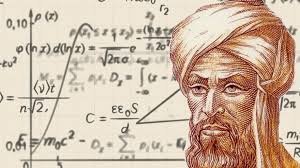
The Baghdad Library and the Silence of the Classroom
The year was 820 AD. Muhammad ibn Musa al-Khwarizmi sat within the House of Wisdom, facing a crisis of scale. The Abbasid administration was buckling under the weight of its own bureaucracy. Traditional Greek geometry relied on static shapes. It was too rigid for the fluid needs of a sprawling empire. Basic arithmetic proved too slow for the complex legal disputes clogging Baghdad’s courts. Those wondering who invented algebra can find the answer here.
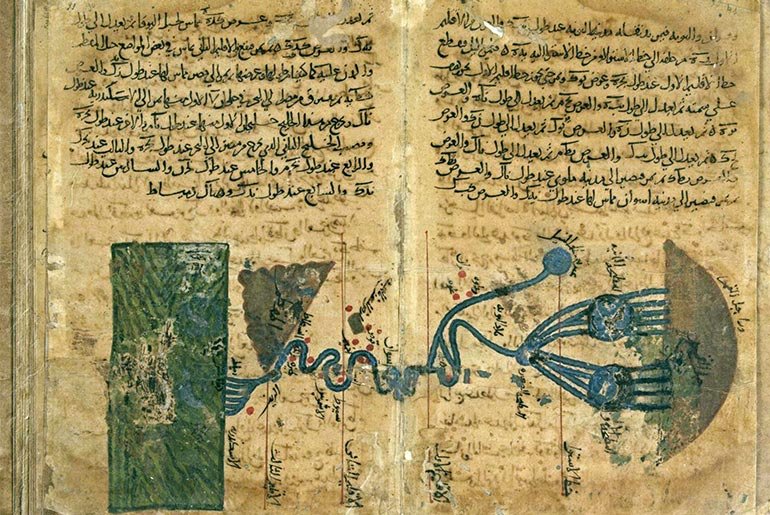
In his seminal work, al-Kitāb al-mukhtaṣar fī ḥisāb al-jabr wa-l-muqābala, al-Khwarizmi didn’t just “solve problems”. He shifted the entire logical paradigm. He moved from the geometric visual. In that system, a “square” was a literal shape. He moved to the algorithmic. Here, a square was a numerical value. This allowed him to tackle specific legal nightmares. He could calculate the mirath (inheritance) for a complex estate divided among multiple heirs with varying shares. He replaced the physical drawing of a plot of land with the “restoration” of an equation. By treating an unknown as a placeholder, he transformed mathematics. It became a tool for systemic balance instead of a description of space, cementing his legacy for anyone asking who invented algebra.
Al-Khwarizmi and the Quest for a Universal Logic
In 820 AD, Muhammad ibn Musa al-Khwarizmi worked within the House of Wisdom in Baghdad. He shifted mathematics from isolated riddles into a rigorous system of rules. Before this, mathematicians solved specific problems. For example, they calculated the area of a plot of land. However, they lacked a generalized method to solve every similar case. Al-Khwarizmi, for those wondering who invented algebra, bridged this gap in his seminal work, Al-Kitāb al-mukhtaṣar fī ḥisāb al-jabr wa-l-muqābala (The Compendious Book on Calculation by Completion and Balancing).
He introduced the dual processes of al-jabr (reduction) and al-muqābala (balancing). He subtracted a negative quantity from both sides of an equation. This did not just find a specific answer. It revealed the underlying structure of the problem. This was a fundamental departure from the geometric approaches of the Greeks. Euclid focused on the visual properties of shapes. Al-Khwarizmi, often cited as the person who invented algebra, systematized the process of manipulation. He transformed mathematics from a descriptive art into a prescriptive science. He proved that the solution was not a lucky guess. It was the inevitable result of a logical, repeatable sequence
Why the World Asks Who Invented Algebra but Forgets the Answer
Baghdad, 825 AD. Inside the House of Wisdom, Muhammad ibn Musa al-Khwarizmi wasn’t using the X and Y symbols we see on modern chalkboards. He wrote in al-Kitāb al-mukhtaṣar fī ḥisāb al-jabr wa-l-muqābala The Compendious Book on Calculation by Completion and Balancing. His “algebra” was rhetorical. He described operations in words, not symbols. He introduced al-jabr (restoring broken parts) and al-muqābala (balancing). This created a systematic method to isolate unknowns in linear and quadratic equations, answering the question of who invented algebra.
This wasn’t an academic exercise. It was a tool for survival. It was designed to solve grueling disputes over Islamic inheritance laws and complex land surveys. The shift was profound. Mathematics moved from the Greek obsession with static geometry to a dynamic science of manipulation.
Why is this specific origin erased from the popular imagination? The 12th-century Latin translations fueled the European Renaissance. These translations stripped the context and left only the technique. We remember the tool, but we’ve forgotten the civilization that forged it. We credit the “discovery” of algebra to the West, ignoring who invented algebra. The actual
Beyond Arithmetic: The Shift from Counting to Solving
Before the 9th century, mathematicians treated equations as isolated puzzles. Solving for an unknown required either geometric intuition or a lucky guess. In Baghdad, Muhammad ibn Musa al-Khwarizmi disrupted this. For those wondering who invented algebra, he introduced al-jabr (restoration) and al-muqābala (balancing) in his seminal work, Al-Kitāb al-mukhtaṣar fī ḥisāb al-jabr wal-muqābala. He didn’t just solve problems; he codified the process.
He defined the unknown as shay (the “thing”). This transitioned mathematics from a descriptive exercise of counting physical objects into a symbolic system. This wasn’t a total divorce from geometry. It was a strategic shift toward abstraction. He treated the “thing” as a logical placeholder. This allowed the operator to manipulate equations regardless of whether they represented land area or currency.
He shifted the focus from the specific answer to the universal method.
Robert of Chester translated this text into Latin in the 12th century. This fundamentally altered European thought. A scholar in Toledo could now apply the same algorithmic steps as a merchant in Persia, further cementing the legacy of who invented algebra. The process became the product. This turned mathematics into a scalable tool for global scientific progress.
The Al-Jabr Revolution and the Art of Restoration
Around 820 CE, Muhammad ibn Musa al-Khwarizmi authored Al-Kitāb al-mukhtaṣar fī ḥisāb al-jabr wa-l-muqābala. He didn’t just solve problems; for those wondering who invented algebra, he introduced “al-jabr,” or restoration. This specific operation involves moving a negative term to the other side of an equation. This makes it positive. It effectively “heals” the equation.
Babylonians used geometric “cut-and-paste” methods to solve quadratic-like problems. They rearranged physical areas to find a length. Al-Khwarizmi moved the process into the abstract. Diophantus focused on finding specific numerical solutions for individual puzzles. In contrast, al-Khwarizmi, often cited when asking who invented algebra, established six standard forms of linear and quadratic equations. He provided general proofs for each. He treated the unknown as a tangible object called the shay (“thing”). He manipulated these “invisible ghosts” of numbers. He used a repeatable system of logic. This bypassed the need for physical drawings in the sand.
He transformed mathematics from a collection of isolated tricks. He made it a rigorous, repeatable system of logic.
A Bridge Between Two Worlds: How Indian Numerals Met Greek Logic
The narrative of mathematical progress usually paints a straight line from Greece to the Renaissance. It treats the intervening centuries as a mere waiting room. This is a mistake. In 9th-century Baghdad, Muhammad ibn Musa al-Khwarizmi, often cited when asking who invented algebra, didn’t just “preserve” knowledge; he engineered a collision.
He synthesized the geometric rigor of Euclid’s Elements with Indian decimal precision. This precision was found in texts like the Brahmasphutasiddhanta. Greek logic was bound by visual shapes. Indian numerals included the revolutionary concept of zero. These remained largely isolated. Al-Khwarizmi bridged this gap in his seminal work, Al-Kitāb al-mukhtaṣar fī ḥisāb al-jabr wa-l-muqābala (c. 830 CE).
He treated the “unknown” as a tangible object to be manipulated. It was not a void. He applied al-jabr, the “restoration” of a broken equation. This shifted algebra from disconnected riddles into a systematic technology, forever answering the question of who invented algebra.
He transformed mathematics from a study of static shapes into a dynamic process. He balanced equations to find a hidden truth.
The Great Erasure: How Islamic Scholarship Became “Western” Science
By 1150, the translation movement in Toledo, Spain, shifted the intellectual axis of Europe. Scholars like Gerard of Cremona spent years translating al-Khwarizmi’s Kitāb al-Jabr wa-l-Muqābala into Latin. This wasn’t a neutral exchange. As these texts reached the University of Paris and the University of Bologna, the lineage fractured. The Arabic al-jabr became the Latin algebra. However, the credit for the system shifted. Al-Khwarizmi was rebranded. He was not an innovator, but a mere conduit for Greek or Indian thought, obscuring the answer to who invented algebra.
The transition from Arabic to Latin wasn’t just a linguistic shift; it was a systemic scrubbing of the origin story.
This erasure served a specific narrative. It framed the Renaissance as a direct “rebirth” of Classical Greece. European thinkers minimized the 9th-century Baghdad synthesis by framing Islamic scholarship as a temporary storage unit. The Latinization of al-Khwarizmi into Algoritmi didn’t aim for Roman citizenship, but for assimilation. The author’s geography and faith vanished into the Latin prose. This happened by stripping the name of its Arabic morphology, erasing the record of who invented algebra. The House of Wisdom’s legacy was absorbed into a story of Western progress, leaving a blind spot in every modern classroom.
The Hidden Architecture of Every Line of Code
By 830 AD, the House of Wisdom in Baghdad became the epicenter of a conceptual shift. Greek mathematics focused on the static physical properties of shapes. Muhammad ibn Musa al-Khwarizmi, often cited when asking who invented algebra, introduced the “unknown” as a manipulatable object. In his seminal work, al-Kitab al-mukhtasar fi hisab al-jabr wa-l-muqabala, he replaced the “isolated tricks” of Diophantine approximations. These tricks solved specific puzzles. He replaced them with a systematic science of general rules.
He treated the equation as a balance. He called the process al-jabr, meaning “the restoration.” This referred to moving a subtracted term to the opposite side to “mend” the balance. This established the first formal algorithmic process. It is a finite sequence of repeatable steps to reach a guaranteed result.
Modern software doesn’t use al-jabr for binary logic. That belongs to George Boole’s 1847 work on symbolic logic. However, it relies on al-Khwarizmi’s symbolic manipulation for everything else. For those wondering who invented algebra, it is clear that when a Python compiler parses a variable or an LLM processes a token, it executes the principle of abstraction al-Khwarizmi pioneered. This means treating a symbol as a placeholder for a value yet to
Whose History Do We Trust When the Math Still Works?
The narrative of human progress is often taught as a leap from Athens to the 15th-century Renaissance. This linear story erases the 9th-century reality of Baghdad. There, the Bayt al-Hikma (House of Wisdom) operated as a state-funded intellectual engine. The Carolingian Empire struggled with basic literacy. Meanwhile, Muhammad ibn Musa al-Khwarizmi, the man often asked about when people wonder who invented algebra, was drafting al-Kitāb al-mukhtaṣar fī ḥisāb al-jabr wa-l-muqābala around 830 CE.
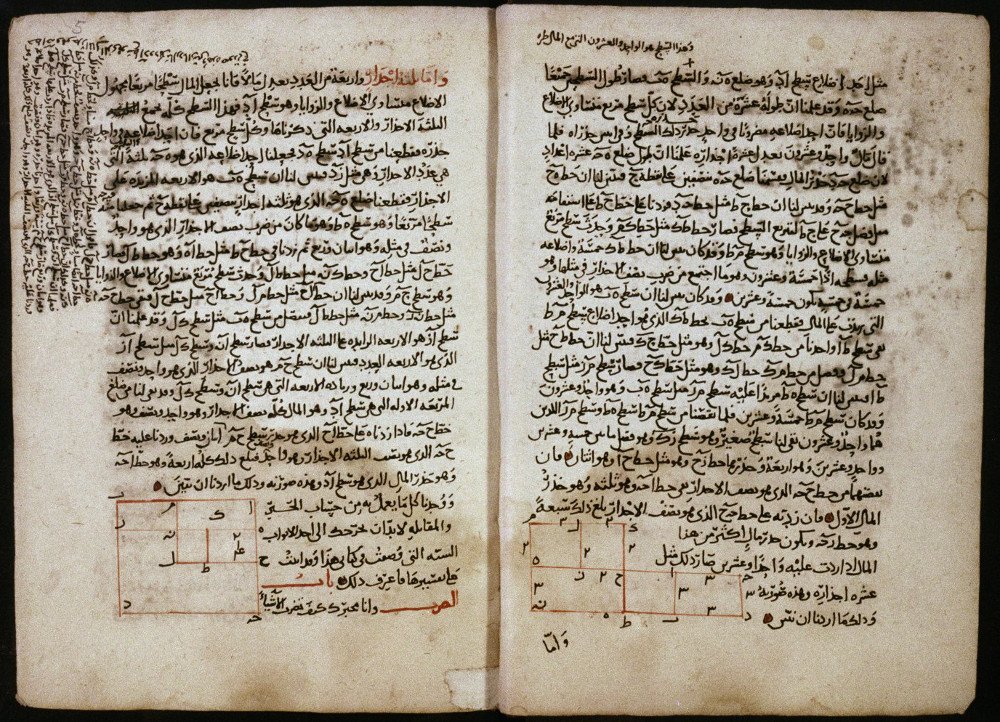
The math still works. Every line of Python code relies on the algorithmic logic al-Khwarizmi codified. Every orbital calculation for a SpaceX launch also relies on it. This knowledge survived because it was portable. Early European curricula focused on the Trivium and Quadrivium through a theological lens. Meanwhile, scholars in Baghdad were synthesizing Indian numerals and Greek geometry. The erasure isn’t accidental. Early modern textbooks attributed “Algebra” to the Latin translation Liber Algebræ, obscuring the answer to who invented algebra. They did this without naming the
Frequently Asked Questions
Q: Who invented algebra?
A: Muhammad ibn Musa al-Khwarizmi is widely credited as the person who invented algebra as a distinct mathematical discipline. While earlier civilizations like the Babylonians and Greeks used rudimentary algebraic concepts, al-Khwarizmi’s 9th-century treatise, Al-Kitab al-mukhtasar fi hisab al-jabr wa’l-muqabala, provided the first systematic method for solving linear and quadratic equations. By introducing the concept of “al-jabr” (restoring), he transformed mathematics from a collection of specific problems into a universal language of logic.
Q: Why is the invention of algebra important for modern science?
A: The invention of algebra by al-Khwarizmi provided the essential framework for almost every scientific advancement that followed. Without the ability to express unknown variables through symbolic relationships, the laws of physics, chemistry, and engineering would be impossible to calculate. Algebra allowed humans to move beyond simple counting to predictive modeling. This shift enabled the later development of calculus and the digital algorithms that power today’s global economy and artificial intelligence.
Q: Did the Greeks invent algebra before the Islamic Golden Age?
A: A common misconception is that the Greeks invented algebra, but they primarily focused on geometric proofs rather than symbolic manipulation. While Diophantus of Alexandria made significant strides in solving equations, he did not create a generalized system. Al-Khwarizmi’s brilliance was in synthesizing Indian and Greek knowledge into a cohesive, operational system. He shifted the focus from finding a specific answer for one problem to creating a general rule that could solve any problem of a certain type.
Q: In what historical context did algebra emerge?
A: Algebra emerged during the Abbasid Caliphate in Baghdad, specifically within the House of Wisdom. This was a period of unprecedented intellectual openness where scholars translated Greek, Persian, and Indian texts into Arabic. Al-Khwarizmi worked in this multicultural hub, combining the Hindu decimal system—which introduced the concept of zero—with Greek logical rigor. This convergence of global knowledge allowed him to develop a mathematical system that was far more flexible and powerful than anything previously known.
Q: Is the word “algorithm” related to the invention of algebra?
A: A surprising fact is that the word “algorithm” is actually a Latinized corruption of al-Khwarizmi’s own name. When his works were translated into Latin in the Middle Ages, his name became Algoritmi. Because his writings introduced the Western world to the decimal system and step-by-step procedural calculation, the term evolved to describe any set of rules used to solve a problem. Every time we use a computer today, we are using a linguistic descendant of his name.

