


The Mapmaker’s Fever Dream: Cecil Rhodes and the Architecture of Extraction
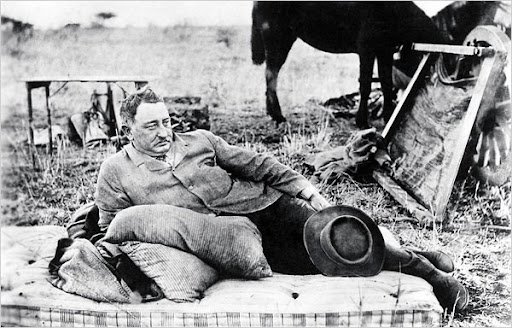
In 1889, Cecil Rhodes stood over a mahogany table in Cape Town, tracing a map of Africa. To the world, he was a diamond magnate. To himself, he was an architect of empire. He envisioned a continuous corridor of British influence from Cairo to the Cape, treating the continent not as a collection of societies, but as a warehouse of minerals and labor to be organized.
Colonialism did not end with the lowering of flags in the 1960s. The legacy persists in the very geometry of the land. It is encoded in the Glen Grey Act of 1894, which systematically pushed Black Africans off their land to create a cheap, landless labor pool for the mines. This wasn’t just a law; it was a blueprint for economic displacement that persists in today’s land disputes.
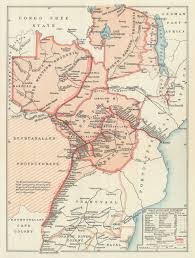
The long-term effects of colonialism are visible in systemic design. Rhodes didn’t build a network; he built conduits. Consider the rail lines stretching from the interior of Rhodesia toward the port of Beira in Mozambique. These were not designed to connect neighboring villages or facilitate regional trade. They were “one-way straws.”
This hub-and-spoke geography ensured that gold and diamonds flowed in a single direction: outward. By prioritizing the Beira corridor over internal connectivity, Rhodes ensured that the interior remained a fragmented periphery, dependent on a distant center of power. This structural void is why many landlocked African nations still struggle with trade costs that are double those of their coastal neighbors.
Discussions on the long-term effects of colonialism often focus on the political turmoil of the mid-century. But the trauma is deeper than a failed coup. It is etched into the segregated urban grids of cities like Salisbury (now Harare), where invisible lines dictated who could breathe the air of the “European” quarters. Rhodes believed he was bringing civilization to a wilderness. In reality, he was installing a machine. To understand why certain economies still feel like they are leaking wealth, we must look at the tools he used to build that machine.
Beyond the Flag: How Rhodes Engineered the Long Term Effects of Colonialism
By 1890, the Glen Grey Act transformed the Eastern Cape into a laboratory for social engineering. Cecil Rhodes didn’t just want land; he wanted a permanent underclass for the Kimberley diamond mines. He pushed laws that forced Black Africans off their ancestral plots and into wage labor. This wasn’t a byproduct of colonial administration—it was the primary objective, contributing to the long term effects of colonialism.
The strategy was surgical. By restricting land ownership and imposing a “hut tax,” Rhodes forced indigenous men into the mines to earn cash. This shattered the traditional farming structures of the Xhosa and Mfengu peoples. To maintain this flow, the mines implemented the “compound system.” These were closed, prison-like barracks where workers were locked away for months. As noted in The Empire of Cotton by Sven Beckert, this type of forced labor organization became a global blueprint for industrial extraction. It created a spatial segregation that served as the direct precursor to apartheid.
Rhodes’s ambition scaled with the “Cape to Cairo” railway. This wasn’t a project of connectivity, but of extraction. The rails were laid to move minerals and troops toward the coast. This turned territories into conduits for wealth flowing to London. The region was reorganized to serve the metropole, leaving internal trade stunted.
The colonial project was not merely about governance, but about the systematic reorganization of human life to maximize the output of raw materials.
This extraction system survived long after the flags were lowered. The borders Rhodes helped solidify ignored the linguistic and ethnic realities of the Bakongo and Luba peoples. This created fragmented states designed for plunder rather than governance. The GDP gaps of the 21st century aren’t merely “legacy issues” or simple long term effects of colonialism. They are the result of what economist Daron Acemoglu describes in Why Nations Fail as “extractive institutions.” These systems were designed to concentrate wealth in the hands of a few. This ensured the economic DNA of the subcontinent remained geared toward export rather than internal growth. The tragedy isn’t that the system failed; it’s that it worked exactly as Rhodes intended.
The De Beers Monopoly and the Blueprint for Resource Theft
By 1888, the Kimberley diamond fields were a chaotic grid of small claims and violent disputes. Cecil Rhodes ended this volatility. He used aggressive buyouts and strategic intimidations instead of diplomacy. In 1888, he formalized this consolidation by founding De Beers Consolidated Mines. By 1890, Rhodes controlled roughly 90% of the world’s diamond production. This corporate hold dictated global pricing until the late 20th century, illustrating the long term effects of colonialism.
To maintain high prices, Rhodes engineered artificial scarcity. He didn’t just control the mines; he controlled the volume of stones hitting the market. To slash overhead and tighten grip on the workforce, he implemented the “closed compound system” in the 1880s. This was not merely a housing project; it was a carceral labor model. Workers were confined behind fences under 24-hour surveillance. To prevent “leakage,” guards conducted invasive body searches. Documented reports from the era describe miners swallowing their own rations to deceive inspectors. These grueling, often violent, strip searches were designed to find a single smuggled stone.
This compound system functioned as a legal loophole. While the Cape Colony’s labor laws of the 1880s provided minimal protections, the closed compound effectively removed the worker from the jurisdiction of civil society. It transformed the mine into a sovereign state where the employer was also the jailer.
The mechanism of this theft was codified in the Rhodes-centric alignment of capital and coercion. Rhodes didn’t just run a company. He leveraged the British South Africa Company charter of 1889. This charter granted him the legal authority to maintain a police force and administer justice. This charter proves that the state did not merely “protect” corporate assets—the corporation was the state. By directing Southern African wealth toward London and the Cape, Rhodes ensured that the ledger of ownership dictated the law of the land. The De Beers monopoly functioned as a national-scale company town. It set a precedent where state military force served as the enforcement arm of a private balance sheet, cementing the long term effects of colonialism.
Which part of this forgotten history surprised you most? Share your thoughts.
Drawing Lines in the Sand: The Arbitrary Borders of the Cape-to-Cairo Dream
Cecil Rhodes viewed Africa not as a collection of sovereign polities. He saw it as a blank canvas for his “Cape to Cairo” railway. By 1890, this ambition shifted from a commercial venture to a geopolitical obsession. It was a 5,000-mile corridor of British hegemony stretching from the Cape Colony to the Mediterranean. Rhodes and his contemporaries treated the terrain as a geometric puzzle. They ignored the complex ecological and linguistic realities of the interior. In the drawing rooms of London and the offices of the British South Africa Company, they used rulers to carve the map. They often did this without ever stepping foot on the land they were partitioning, ignoring the long term effects of colonialism.
This cartographic arrogance created a structural disaster. The logic of the Berlin Conference (1884-85) prioritized European “effective occupation” over indigenous reality. Rhodes’s vision forced disparate groups—such as the Matabele and the Ndebele—into administrative units. These were designed for extraction, not governance. He didn’t just group rivals; he surgically severed ethnic kinship. The Somali people, for instance, were split between British, Italian, and Ethiopian spheres of influence. This ensured that any future state would be born with a missing limb.
The tragedy of the Cape-to-Cairo dream was that it prioritized a British line on a map over the organic boundaries of African civilization.
The standard narrative claims these borders simply “caused instability.” The reality is more precise: the borders were designed as conduits for gold, diamonds, and rubber. This effectively turned states into conveyor belts for British capital. When nations gained independence in the 1960s, they inherited these “political cages,” a testament to the long term effects of colonialism. The subsequent violence in the Congo or the Sudanese Civil War (1955-1972) was not the result of “ancient tribal hatreds.” This was a convenient trope used by Western press to dismiss the chaos. Instead, it was the inevitable friction of forcing the Dinka and the Arab populations into a single, artificial unit. As argued in The Wretched of the Earth by Frantz Fanon, the colonial state was never meant to be a nation; it was a tool of management. Rhodes didn’t just draw lines; he engineered a century of systemic fragility to ensure the smooth flow of minerals to London.
Institutionalizing Inequality: The Legal DNA of Apartheid
The Glen Grey Act of 1894 was a blueprint. Cecil Rhodes, as Prime Minister of the Cape Colony, used this law to dismantle the autonomy of the Thembu people. By restricting land ownership and imposing a “labor tax”—specifically the individual labor tax—Rhodes criminalized subsistence. This wasn’t a random levy; it was a calculated mechanism to force African men into the wage economy. If a man stayed on his ancestral land, he paid a tax he couldn’t afford without cash. That cash only existed in the Kimberley diamond mines or the Witwatersrand gold fields.
This was the birth of institutionalized segregation, built on the mathematics of extraction. Rhodes understood that mining profitability depended on labor being cheap and disposable. He didn’t just want employees; he wanted a class of people stripped of choice. The Glen Grey Act proved that the law could be weaponized. It turned citizens into servants of the state by taxing the act of staying home, illustrating the long term effects of colonialism.
The legal framework established in the late 19th century shifted the focus. It moved from simple territorial conquest to the systematic control of human movement and economic opportunity.
By the time the South Africa Act of 1909 merged the colonies into a single union, the precedent for “separate development” was already embedded in the bureaucracy. Colonialism had evolved from the waving of a flag to the manipulation of land deeds. This trajectory culminated in the Natives Land Act of 1913. Section 2 of the Act explicitly prohibited the buying or leasing of land by “natives” in areas designated as “white” zones. This single legal clause codified the 93% figure. It reserved the vast majority of the territory for the white minority and confined the Black population to fragmented “reserves.”
Apartheid did not emerge spontaneously in 1948. It was a refined version of the system Rhodes spent decades constructing. He built a legal cage. The spatial segregation seen today in Cape Town and Johannesburg is the ghost of the 1894 Act and a testament to the long term effects of colonialism. The map was drawn in ink and enforced through statutes to ensure that poverty remained hereditary.
The Language of Power: Erasure as a Tool of Empire
The 1890 Glen Grey Act in the Cape Colony was not merely a land grab; it was a psychological operation. Cecil Rhodes forced Black Africans off ancestral plots and into a precarious wage-labor system. He targeted the linguistic ties that anchored these communities to the soil, initiating the long term effects of colonialism.
Language is the architecture of memory. Rhodes mandated English in official records and mission schools. This ensured it became the sole gateway to the legal system. This created a cognitive rift. The colonized had to articulate their grievances in the tongue of the oppressor to be heard. In The Wretched of the Earth, Frantz Fanon argues that the imposition of the colonizer’s language is a means of denying the colonized their own history.

This erasure manifested physically on the map. The colonial administration didn’t just rename geography; they stripped it of meaning. Specific Xhosa descriptors for the landscape encoded ancestral lineage and ecological knowledge. These were replaced by British identifiers. A peak known to locals for its spiritual significance was rebranded as “Hill 42” or named after a mid-level British administrator. In many archives, sacred sites were “translated” into bland descriptors. A grove tied to ancestral spirits became simply a “Woodland.” This effectively deleted the site’s metaphysical value.
The act of renaming a landscape is not about navigation, but about ownership. It signals that the previous history of the land is irrelevant to the new masters.
This linguistic displacement was a prerequisite for violent extraction. The Cape Colony administration labeled Xhosa and Zulu languages as “primitive” or “dialectal” in the 1890s. This established a narrative of intellectual void. This “civilizing” rhetoric justified the seizure of mineral-rich lands. The British claimed the land was terra nullius if the inhabitants had no “formal” language to describe property rights. First came the erasure of the word, then the theft of the soil. This sequence ensured that by the mid-20th century, the damage was systemic, illustrating the long term effects of colonialism. The empire extracted diamonds and gold, but its most enduring theft was the vocabulary of identity.
Economic Scars and the Long Term Effects of Colonialism in Southern Africa
By 1890, the Glen Grey Act turned the Eastern Cape into a laboratory for social engineering. Cecil Rhodes required a steady labor force. He implemented a “hut tax” to force subsistence farmers into the cash economy. To pay this tax, men abandoned their plots for the De Beers diamond mines or the Witwatersrand gold fields. This was the intended design.
Rhodes constructed an economic loop of extraction, shifting wealth from the soil to the boardroom. This displacement created a migrant labor system. It fractured families for generations. This was not merely a policy of movement. Sociologist Mahmood Mamdani describes this in Citizen and Subject as a deliberate creation of “bifurcated states.” In these states, indigenous people were denied citizenship. They were relegated to ethnic “subjects.” Men were stripped of their status as providers, becoming mere “units of labor” in a ledger. This systemic dehumanization constitutes the structural violence of the era and illustrates the long term effects of colonialism. Frantz Fanon documents this in The Wretched of the Earth. This psychological erosion justified the physical violence of colonial rule. It reduced the colonized to an instrument of production.
The economic model was simple: strip the land of its minerals while stripping the people of their autonomy. This created a permanent underclass designed to serve industrial interests.
This extraction extended beyond minerals. Rhodes ensured white settlers seized the most fertile highlands. He pushed the indigenous population into “reserves,” which were crowded, arid tracts of land. By 1900, the mining sector surged. The rural economy was intentionally crippled to maintain a supply of cheap labor.
The legacy of this era is etched into the geography of wealth. Railways were not designed for internal trade or community connection; they were “extractive corridors.” For example, the line from the interior of Rhodesia (now Zimbabwe) to the port of Beira was engineered specifically to transport chrome and tobacco to Europe. It bypassed local markets entirely. This extractive geography persists. Southern African economies still struggle to diversify away from the raw commodity exports Rhodes institutionalized over a century ago, reflecting the long term effects of colonialism. These scars are not just historical; they are fiscal.
The Rhodes Scholarship: Exporting the Imperial Narrative to the Elite
Cecil Rhodes did not view the scholarship as a gift of education. Instead, he saw it as a strategic investment in “the world’s most capable men.” Established in 1902, the trust was designed to create a global network of leaders. These leaders would instinctively preserve British hegemony and the long term effects of colonialism. Rhodes wasn’t looking for ivory-tower academics; he wanted an intellectual vanguard.
The scholarship targeted a specific archetype: the “manly” scholar. In his will, Rhodes explicitly demanded candidates who excelled in “manly” sports. He specifically meant rugby and rowing alongside their studies. This wasn’t about health. Rhodes believed the aggressive, territorial nature of the rugby pitch was ideal. It provided psychological training for the “brutality of colonial administration.” He saw the field as a laboratory for dominance. This was the same dominance required to manage the frontiers of the Cape Colony.
This “manliness” was paired with a rigid intellectual diet. Rhodes funneled scholars into Oxford’s Literae Humaniores (Classics) programs. This ensured they internalized the “civilizing mission” through the lens of Plato and Aristotle. They didn’t just read Greek and Latin. They learned to view the world through a hierarchy. In this view, the “rational” West naturally governed the “irrational” East. This was the internalized truth: power was the reward for intellectual and physical superiority.
The result was a psychological infrastructure that outlasted the empire. This manifested in the 20th century through the “White Highlands” policies in Kenya during the 1920s and 30s. The administrators managing these settler colonies weren’t just following orders. They were applying the specific logic of “stewardship” they had absorbed at Oxford. They viewed the displacement of indigenous populations not as a crime. They saw it as a necessary administrative step in a higher moral order, contributing to the long term effects of colonialism.
The scholarship functioned as a filter. It selected for brilliance while anchoring that intellect to the preservation of a specific global order. It validated the idea that a small group of Western men possessed a unique right to manage the “less developed” world. The legacy isn’t just in old archives. It is in the very definition of “merit” and “prestige” that still governs international diplomacy today.
Invisible Walls: The Urban Planning of Segregation and Control
By 1903, Salisbury—now Harare—was designed for surveillance rather than habitation. The city’s layout followed the Salisbury Town Planning Scheme. This was a rigid grid intended to isolate the white administrative center from “native” locations. This wasn’t accidental. Figures like Sir Cecil Rhodes and the early British South Africa Company administrators viewed geography as a weapon. From their wide verandas, officials could monitor the movement of black laborers. This ensured the city functioned as a panopticon.
This system relied on “buffer zones”—strips of wasteland or industrial belts—as physical barriers. In Rhodesia, this meant pushing indigenous people into overcrowded townships on the periphery. These boundaries provided the structural blueprint for South Africa’s later Group Areas Act of 1950. The precision was clinical. Under the guise of the Public Health Ordinance, planners implemented “sanitary zones.” These were empty strips of land ostensibly to prevent the spread of disease.
In practice, these were tactical kill zones. By stripping away vegetation and structures, planners created clear lines of sight. This allowed the British South Africa Police to fire upon crowds without obstruction. Controlling where a person slept and how they traveled to work—specifically through the “pass” system—limited their ability to organize.
The physical layout of the city became a tool of governance. It ensured that the marginalized remained visible but separate. This turned urban planning into a mechanism of social control. This spatial violence is a lasting effect of colonialism. Laws and flags change, but the concrete remains. The “invisible walls” of the colonial era are built into the city’s soil.
Today, the commute for millions in Southern Africa is still dictated by these century-old maps. People travel hours from peripheral townships to city centers. This is because colonial architects maximized the distance between workers and wealth. The effects of this design appear in modern traffic gridlocks and the systemic lack of infrastructure in former “native” zones. Rhodes built a system of exclusion that outlasted his empire. The map functioned as a weapon; the city, as a battlefield.
The Ghost in the Machine: Why Colonial Bureaucracies Still Govern
South Africa formally united in 1910. However, Cecil Rhodes drafted the blueprint for its administration decades earlier. He didn’t just want a colony. He wanted a governance system that functioned like a corporate ledger. To fuel the Kimberley diamond mines and the Witwatersrand gold fields, Rhodes implemented the “hut tax.” This bureaucratic lever forced indigenous men into wage labor to settle debts with the state. It was a calculated move to ensure a steady stream of cheap labor, illustrating the long term effects of colonialism.
This focus on extraction created a structural inertia that outlasted British rule. The dispossession wasn’t just a result of violence. It resulted from specific legislation. The Glen Grey Act of 1894 served as a prototype. It stripped traditional communal ownership and replaced it with colonial titles. These documents weren’t merely legal records; they were weapons of erasure. These titles were registered in distant offices and written in English. They effectively locked the original owners out of their own land. This paperwork provided the administrative skeleton for apartheid. Registries, zoning laws, and tax codes were engineered to ensure the majority remained severed from the means of production.
The colonial state was not merely a military occupation; it was a managerial project designed to optimize the flow of resources from the periphery to the center.
Daron Acemoglu and James Robinson argue in Why Nations Fail that “extractive institutions” stifle growth. The reality is more sinister. These machines were designed to be inherited. Post-colonial states didn’t just keep the buildings; they kept the logic, perpetuating the long term effects of colonialism. In Zimbabwe and Zambia, the “hub-and-spoke” infrastructure is a physical manifestation of this corporate design. Roads lead almost exclusively to ports like Beira or Dar es Salaam. They do not connect internal markets. According to World Bank logistics data, these corridors prioritize the exit of minerals over the movement of people. The state architecture continues to view citizens as obstacles to be managed rather than constituents to be served. Rhodes’s corporate empire changed its name, but the machine remains. It prioritizes the export of wealth over the stability of the community.
Who Actually Owns the History of the Land?
Cecil Rhodes didn’t just seize territory; he codified a new grammar of ownership. In 1889, he secured a Royal Charter for the British South Africa Company (BSAC). This corporate entity effectively privatized the conquest of the region. This wasn’t a government venture in the traditional sense—it was a corporate takeover. Under the Royal Charter of 1889, Rhodes transformed ancestral soil into a “concession.” This legal mechanism converted indigenous land into a corporate asset. It was leveraged for shareholders in London, cementing the long term effects of colonialism.
He drew borders by the trajectory of the Cape to Cairo railway. He also used the location of diamond pipes. This is the core of colonial logic. A signature on a piece of parchment in a London office carries more legal weight than a millennium of ancestral presence.

The volatility currently gripping Southern Africa is not a product of “primitive” tribalism. It is the lingering friction of the Land Apportionment Act of 1930. This act was a direct descendant of Rhodes’ philosophy. This law institutionalized a racialized geography, reserving 87% of the land for the white minority. By designating “native reserves,” the state didn’t just steal land. It created a legal framework for systemic displacement. This persists in modern land tenure disputes and illustrates the long term effects of colonialism.
Rhodes viewed the world as a ledger of assets. This worldview created a psychological fracture. The land was stripped of its sanctity and reduced to a resource for extraction. The governance systems he installed were never intended for community welfare. They were designed for the efficient movement of minerals from the ground to the coast.
The geography of power is rarely erased; it is simply renamed. The structures Rhodes built survive in the Native Land Act’s legacy and the artificial borders of Zimbabwe and Zambia. If the modern state was built on the foundation of a corporate charter, can that same structure ever truly deliver justice?
The real question isn’t what Rhodes took from the land it’s whether the legal definitions of “ownership” he left behind can ever be dismantled.
Frequently Asked Questions
Q: What are the long term effects of colonialism on modern society?
A: The long term effects of colonialism are most visible in the systemic inequalities and border disputes that define current geopolitical tensions. Beyond physical occupation, colonial powers implemented administrative structures and legal codes designed for extraction rather than governance. These frameworks often persisted long after independence, leaving newly sovereign nations to struggle with institutions that were fundamentally built to marginalize the local population and serve foreign interests.
Q: Why does the long term effects of colonialism still matter today?
A: Understanding the long term effects of colonialism matters because it explains the root causes of economic disparities between the Global North and South. The historical drain of wealth and resources wasn’t just a series of isolated thefts, but a deliberate architectural shift in global trade. When we analyze current poverty rates or political instability, we are often seeing the delayed echoes of policies enacted centuries ago to ensure imperial dominance.
Q: Is it a misconception that the long term effects of colonialism were purely destructive?
A: A common misconception regarding the long term effects of colonialism is the “civilizing mission” narrative, which suggests that colonial infrastructure—like railways and courts—was a net benefit. In reality, these tools were designed for efficiency in resource extraction, not for public welfare. While the physical structures remain, they were built on forced labor and systemic erasure, meaning the “benefits” were secondary to the primary goal of imperial control.
Q: How did historical administrative shifts contribute to the long term effects of colonialism?
A: The long term effects of colonialism were cemented through the “divide and rule” strategy, where colonial administrators weaponized ethnic and religious differences to prevent unified resistance. By creating artificial hierarchies and drawing arbitrary borders—such as the 1916 Sykes-Picot Agreement—imperial powers ensured that post-colonial states would be plagued by internal conflict. This intentional instability made it far easier for former colonizers to maintain influence through economic leverage.
Q: What is a surprising fact about the long term effects of colonialism on language?
A: One surprising aspect of the long term effects of colonialism is the “linguistic hegemony” that continues to dictate global intellectual prestige. The imposition of European languages wasn’t merely for communication, but to delegitimize indigenous knowledge systems and scholarship. Today, this manifests in how academic success is often measured by proficiency in a colonial tongue, effectively silencing a vast reservoir of ancestral wisdom and alternative ways of understanding the world.

