


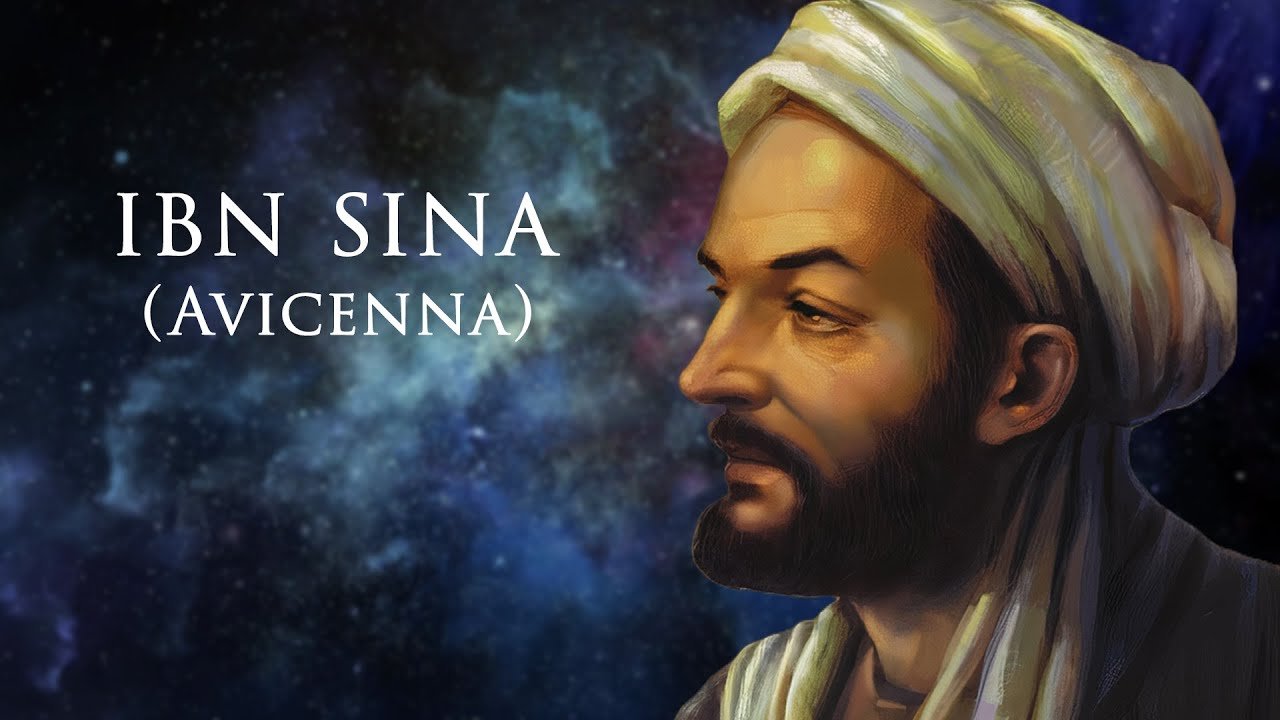
In the year 1025, a book was completed in Persia that would go on to be used as the primary medical textbook in universities across Europe and the Islamic world for the next five hundred years. Its author was not Greek, not Roman, not European. He was a Muslim scholar from Bukhara, a man who had memorized the Quran by age ten, mastered philosophy by sixteen, and cured a ruling prince of a debilitating illness by eighteen. His name was Ibn Sina, known in the West as Avicenna, and he remains one of the most extraordinary intellects in all of human history.
Today, if you ask most people in the West who invented modern medicine, they will say Hippocrates or Galen. They are not entirely wrong, but they are far from complete. The bridge between ancient Greek medicine and the modern clinical world was built almost entirely by Ibn Sina, whose Canon of Medicine systematized, corrected, and vastly expanded on everything that had come before it. That his name is not taught in every school on earth is not an accident of history. It is a consequence of which histories got told, and which were buried. As part of the remarkable Golden Age of Islamic Science, Ibn Sina’s contributions stand as perhaps the most enduring single-handed intellectual legacy the medieval world ever produced.
A Mind Born Into a World of Knowledge
Ibn Sina was born in 980 CE in Afshana, a small village near Bukhara in what is now Uzbekistan, then the heart of the Persian-speaking Islamic world. His father was a government official and a scholar himself, determined to give his son the finest education available. The family soon moved to Bukhara, one of the great intellectual cities of the age, rivaling Baghdad in its density of libraries, scholars, and philosophical debate.
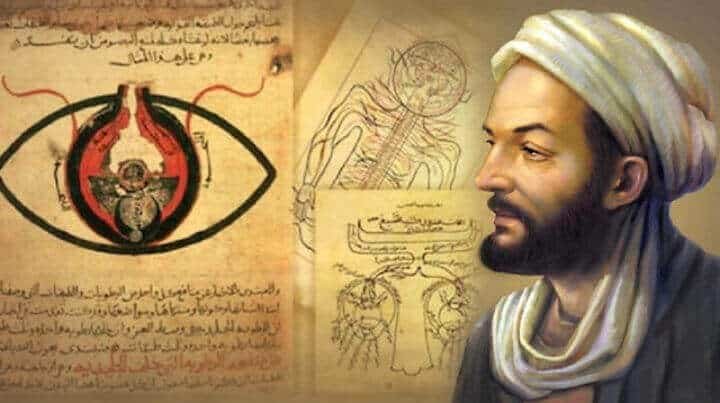
By the age of ten, Ibn Sina had memorized the entire Quran and large portions of classical Arabic poetry. By fourteen he had surpassed his own teachers in logic and philosophy. By sixteen he turned to medicine, and found it, in his own words, “not difficult.” Within two years he was treating patients. When the Samanid Sultan Nuh ibn Mansur fell gravely ill and recovered under Ibn Sina’s care, the young physician was rewarded with unrestricted access to the royal library — one of the finest in the world at the time. He later wrote that he found books there he had never encountered anywhere else, and never would again.
He was not merely a physician. In a tradition rooted in the same culture that produced Baghdad’s House of Wisdom, Ibn Sina embodied the Islamic scholarly ideal: a man who held that all branches of knowledge were connected and that understanding one required understanding the others. He wrote on logic, mathematics, astronomy, music, theology, and poetry, producing an estimated 450 works in his lifetime, of which around 240 survive.
What Made Ibn Sina’s Contributions Extraordinary
To understand the scale of Ibn Sina’s achievement, it helps to understand the world he walked into. Medicine in the 10th century was a fragmented discipline, scattered Greek and Roman texts, oral traditions, folk remedies, and religious practices existed side by side with little systematic organization. Ibn Sina changed all of that with a single, monumental work: the Canon of Medicine (Al-Qanun fi al-Tibb).
- Scale of the Work: The Canon of Medicine spans over one million words across five volumes, covering general principles of health, simple drugs, organ-specific diseases, conditions affecting the whole body, and compound medicines. It was not a book, it was an encyclopedia of all known medical knowledge, restructured from the ground up.
- Clinical Precision: Ibn Sina described over 760 drugs and their medicinal properties. He identified the role of soil and water in spreading disease — anticipating germ theory by nearly 900 years. He recognized that tuberculosis was contagious and recommended quarantine long before the concept existed in Western medicine.
- Psychological Medicine: He was among the first physicians to systematically link mental states to physical illness, recognizing what we would today call psychosomatic disease. He used music therapy, and documented conditions matching what modern medicine calls depression and anxiety.
- Surgical Advancement: He described surgical procedures for cancer and mandated that tumors be removed in their entirety, a principle still followed today. He also developed detailed protocols for the use of anesthesia-adjacent substances during procedures.
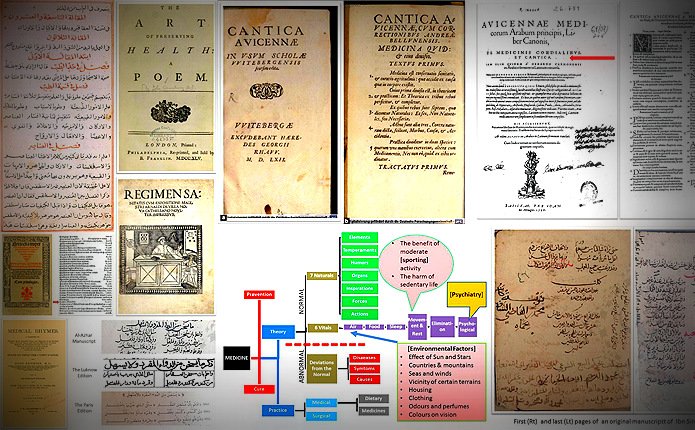
- Duration of Influence: The Canon was translated into Latin in the 12th century and was a required textbook at the universities of Montpellier and Leuven until the 17th century, making it the longest-serving medical textbook in Western academic history.
The Canon of Medicine: A Book That Outlasted Empires
There is a remarkable test for a book’s true greatness: does it survive the fall of the civilization that produced it? The Canon of Medicine not only survived, it thrived. When the Mongols swept through Central Asia in the 13th century, burning libraries and erasing cities, copies of Ibn Sina’s masterwork were already scattered across three continents. When the Crusaders returned to Europe carrying fragments of Islamic scholarship, the Canon was among the first texts to be translated. When the printing press was invented in Europe, the Canon was among the first medical texts to be printed, going through at least thirty editions before 1500.
What made it so durable was not just its content but its architecture. Ibn Sina approached medicine the way a philosopher approaches a system of thought, by beginning with first principles and building outward with rigor and clarity. He defined health, disease, and the interactions between them with a precision that made the work feel more like a logical treatise than a collection of remedies. He categorized illnesses by cause, symptom, and treatment in a way that allowed physicians to navigate the text as a reference tool, not just read it as a narrative. This was revolutionary.
Beyond the organizational brilliance, the Canon contained genuine scientific advances that were ahead of their time by centuries. Ibn Sina understood that diseases could be transmitted through water and soil, a concept that would not be formally articulated in the West until John Snow’s cholera work in the 1850s. He introduced the concept of clinical trials, insisting that drugs should be tested on the human body before being prescribed, and that testing on animals was insufficient proof of effectiveness in humans. He developed the idea of a “risk-benefit” analysis before prescribing treatments. These are not primitive forerunners of modern ideas, they are modern ideas, written down in the 11th century.
A Life of Brilliance Lived on the Run
The popular image of a great scholar is a man at peace in his library, surrounded by students and royal patronage. For Ibn Sina, reality was far more turbulent. His life after the collapse of the Samanid dynasty became a decades-long flight from political instability, imprisonment, and danger. He wandered from court to court across Persia, serving as physician and vizier to various rulers while writing obsessively, often at night, often in hiding, sometimes in prison.
At one point, the Sultan Mahmud of Ghazni, a powerful and ruthless ruler, sent portraits of Ibn Sina across his empire ordering his capture. Ibn Sina refused to serve him and spent years evading his reach. He was eventually imprisoned in the fortress of Fardajan by a local ruler, and it was there, in a cell, that he continued writing. The man who would define medical education for five centuries was doing so while a king hunted him.
His philosophical writings, particularly his interpretations of Aristotle and his speculations on the soul and afterlife, also put him at odds with conservative Islamic theologians, most famously Al-Ghazali, who later wrote a direct rebuttal to Ibn Sina’s philosophical framework. He was accused of heresy, defended himself in writing, and pressed on. This tension between his towering intellectual freedom and the political and religious constraints of his era makes him a deeply modern figure, a reminder that genius rarely arrives without friction.
“The world is divided into men who have wit and no religion and men who have religion and no wit.”
— Ibn Sina (Avicenna)
The Bridge Between Two Worlds
To understand Ibn Sina’s place in history, you have to confront a problem that Western historiography has rarely addressed honestly: there is a gap between the fall of classical Greek learning around the 5th century CE and the European Renaissance of the 14th to 17th centuries. That gap is often called the “Dark Ages” in European historical memory. But it was not dark everywhere. In the Islamic world, that millennium was a period of extraordinary intellectual vitality — and Ibn Sina was its brightest light.
The Greek texts of Hippocrates, Galen, and Aristotle did not flow directly from ancient Athens to Renaissance Florence. They were preserved, translated, corrected, and dramatically expanded by Arab and Persian scholars working in Baghdad, Cordoba, and Bukhara. When European universities began to form in the 12th and 13th centuries, the curriculum they taught was not recovered from ancient Rome, it was translated from Arabic. This is the transmission story behind how Islamic knowledge sparked the European Renaissance, and Ibn Sina was its central figure in medicine.
His contemporary Al-Farabi had laid the philosophical groundwork for synthesizing Greek thought with Islamic theology. Ibn Sina built on that foundation and extended it into science, medicine, and metaphysics. Together they represent a tradition of inquiry that understood knowledge as a universal endeavor, exactly the kind of story that, as we have documented in our coverage of lost civilizations and suppressed intellectual legacies, deserves to be told in full.
Ibn Sina vs. Hippocrates and Galen: Who Really Built Modern Medicine?
Western medicine traces its roots to Hippocrates and Galen — but that lineage is deliberately incomplete. Compare the three figures who shaped medicine most, and the picture that emerges is harder to ignore:
| Aspect | Hippocrates (460–370 BCE) | Galen (129–216 CE) | Ibn Sina / Avicenna (980–1037 CE) |
|---|---|---|---|
| Primary Work | Hippocratic Corpus (~70 texts) | On the Natural Faculties | Canon of Medicine (5 volumes, 1M+ words) |
| Disease Theory | Four humors | Expanded four humors | Humors + contagion + environmental causation |
| Contagion Theory | Not developed | Not developed | Identified soil and water as disease vectors |
| Mental Health | Limited coverage | Limited coverage | Systematic — linked mind and body, used music therapy |
| Drug Testing | Observational only | Observational only | Advocated human trials; proto-clinical methodology |
| Years Used as Textbook | ~8 centuries | ~13 centuries | ~5 centuries in both Islamic AND European universities |
| Known in Western Schools? | Yes — extensively | Yes — extensively | Rarely — despite equal or greater contribution |
The question this table raises is not rhetorical. If a European physician and a Muslim physician produced works of equivalent depth and longevity, why does only one appear in school textbooks? The answer lies not in the quality of the work, it lies in which stories 19th-century European academic institutions chose to amplify when constructing their narratives of civilizational progress.
Ibn Sina’s Living Legacy in the Modern World
Ibn Sina died in 1037 CE in Hamadan, Persia, reportedly from overwork, at just fifty-six years old. In nearly four decades of adult life, he had written hundreds of works that would shape human knowledge for the next millennium. His legacy today is quietly embedded in the very foundations of modern medicine, even where his name has been forgotten.
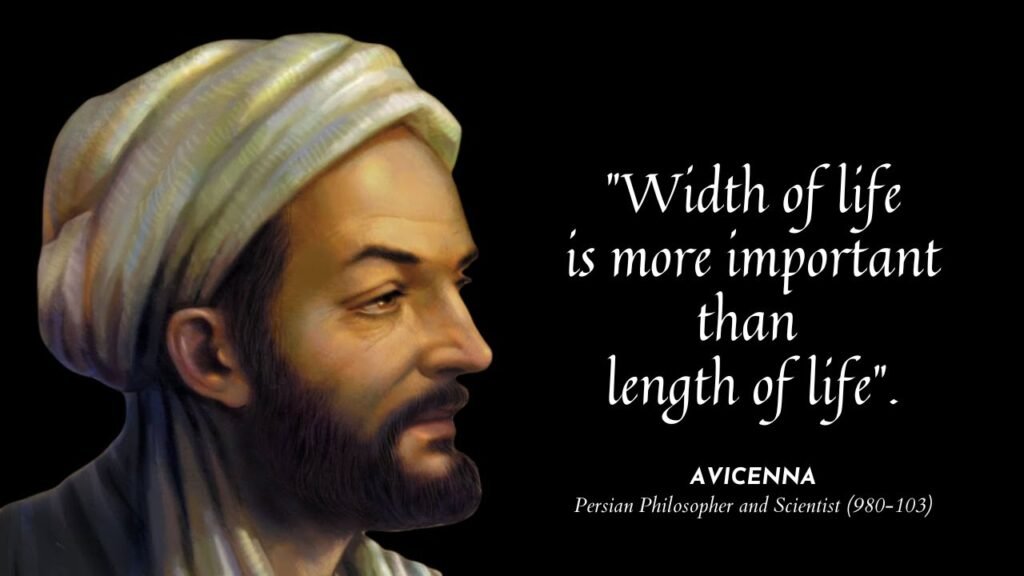
Several elements of his thinking have proven eerily prescient: his insistence on quarantining the sick predates modern epidemiology by 800 years; his proto-clinical trial methodology anticipates the randomized controlled trial; his psychosomatic framework predates the formal establishment of psychiatry by a millennium. The World Health Organization’s definition of health as a state of complete physical, mental, and social well-being, echoes ideas Ibn Sina articulated in the opening chapters of the Canon nine centuries ago.
In Iran and Central Asia, he is a national hero. Tajikistan placed his image on its currency. Uzbekistan built a bronze statue of him in Bukhara, his birthplace. UNESCO has recognized his contributions to both science and philosophy. Yet in most Western schools, he remains absent, known only to medical history students who encounter his name in a footnote. This is the same pattern of erasure we have documented across the broader history of Islamic scientific achievement: contributions absorbed into European knowledge and then quietly re-attributed or simply unnamed.
Final Thoughts: The Physician Who Shaped the World Without Recognition
Ibn Sina did not walk 75,000 miles like Ibn Battuta. He did not build an empire or lead an army. He sat in libraries, in palaces, in prison cells, and in makeshift studies on the road, and he thought, with a precision and depth that has rarely been matched in human history. His greatest journey was inward: a relentless effort to understand the human body, the human mind, and the world they inhabit.
The fact that his name is not as familiar in the West as Newton or Darwin is not a verdict on the quality of his work. It is a verdict on the quality of our historical memory, selective, self-serving, and long overdue for revision. When European universities were teaching the Canon of Medicine for five centuries, they knew exactly whose book it was. The forgetting came later, deliberately, as part of a broader project of rewriting the intellectual inheritance of the West.
Ibn Sina’s story matters not just as history, but as a corrective. If we are serious about understanding where knowledge comes from, we cannot afford to only celebrate the thinkers whose names were preserved by those with the power to write the story. The physician from Bukhara deserves his place, not beside Hippocrates as an honorable mention, but at the center of the story of human medicine, exactly where history placed him before we chose to look away.
“My soul is too big for its cage, and the world too small a stage. I was a book written in the language of the universe — and most of you never learned to read it.”
— Original line inspired by Ibn Sina’s own writings on the soul
Frequently Asked Questions
Who was Ibn Sina (Avicenna) and why is he important to medical history?
Ibn Sina, known in the West as Avicenna, was a 10th-century Persian physician and polymath born in 980 CE in Bukhara (present-day Uzbekistan). He is important to medical history because his five-volume encyclopedia, the Canon of Medicine, became the definitive medical textbook in both Islamic and European universities for over five hundred years. Ibn Sina systematized all existing medical knowledge, introduced proto-clinical trial methodology, identified contagious disease mechanisms, and linked mental and physical health in ways that anticipated modern medicine by centuries. His work was taught at the universities of Montpellier and Leuven well into the 17th century, making him one of the most enduringly influential physicians in history.
What is the Canon of Medicine and what did it contribute to science?
The Canon of Medicine (Al-Qanun fi al-Tibb) is Ibn Sina’s masterwork, completed around 1025 CE. It is a million-word, five-volume encyclopedia covering general health principles, simple medicinal drugs, organ-specific diseases, systemic conditions, and compound medicines. Its scientific contributions include the identification of over 760 medicinal substances, the concept that diseases can be transmitted through soil and water (anticipating germ theory by 800 years), early quarantine recommendations for tuberculosis, the principle of testing medicines on humans rather than relying solely on animal testing, and systematic documentation of psychological conditions. The Canon remained a required medical textbook in European universities for five centuries and was among the first medical texts printed after the invention of the printing press.
How does Ibn Sina compare to Hippocrates and Galen in terms of medical contribution?
Ibn Sina built on and significantly advanced the work of both Hippocrates and Galen. While Hippocrates established the four-humor framework and Galen expanded it, Ibn Sina added the concepts of environmental and waterborne contagion, systematic mental health treatment, proto-clinical trial methodology, and a far more comprehensive drug taxonomy than either predecessor. His Canon of Medicine was used as a university textbook in both the Islamic world and Europe for five centuries. The key difference is legacy: Hippocrates and Galen are household names in Western education, while Ibn Sina remains largely absent from non-specialist curricula, despite equal or greater contributions to the foundations of modern medicine.
Why is Ibn Sina not well known in Western countries despite his contributions?
Ibn Sina is not widely known in the West primarily due to the selective nature of European academic historiography developed during the 18th and 19th centuries. As European universities built their narrative of intellectual progress, they tended to trace knowledge directly from ancient Greece to the Renaissance, bypassing the Islamic scholarly tradition that served as the actual bridge between these periods. Ibn Sina’s Canon was translated into Latin and taught in European universities for centuries, meaning European scholars of the time knew exactly who he was. The erasure came later, as part of broader cultural and colonial dynamics that reframed Western civilization as the primary source of human intellectual achievement.
Did Ibn Sina anticipate modern concepts like germ theory or clinical trials?
Yes, in remarkable ways. Ibn Sina identified in the Canon of Medicine that bodily secretions could contaminate soil and water and transmit disease to others, a concept that prefigures germ theory as formalized by Pasteur and Koch in the 19th century. He also recommended isolating patients with tuberculosis from healthy people, a quarantine principle that would not appear in formal European medical guidelines for centuries. On clinical trials, Ibn Sina insisted that the efficacy of a medicine must be tested on the human body under controlled conditions, anticipating the modern randomized controlled trial by approximately 900 years. These were not vague intuitions; they were written as systematic methodological principles in a textbook taught to doctors worldwide.
📖 Avicenna (Ibn Sina) — Encyclopædia Britannica
📢 Share this article — #RediscoverIbnSina
✈️ The world taught Ibn Sina’s medicine for 500 years. It’s time to teach his name.
Related Articles
- Golden Age of Islamic Science: How Muslim Scholars Revolutionized Knowledge
- The Lost Library of Baghdad: The House of Wisdom and Its Untold Legacy
- The Second Master: Al-Farabi’s Influence on Islamic Philosophy
- How Islamic Knowledge Sparked the European Renaissance
- Ibn Battuta: The Man Who Outtraveled the World

 a 10th-century Muslim physician whose Canon of Medicine dominated medical education for 500 years.)