



The Three-Second Trade: How We Sold Our Secrets for Effortless Living
In 2014, a man in San Francisco asked a small plastic tube for the weather. He didn’t realize he was placing a permanent listener in his living room. Privacy wasn’t traded for a smart speaker; it was traded for three seconds of saved effort.
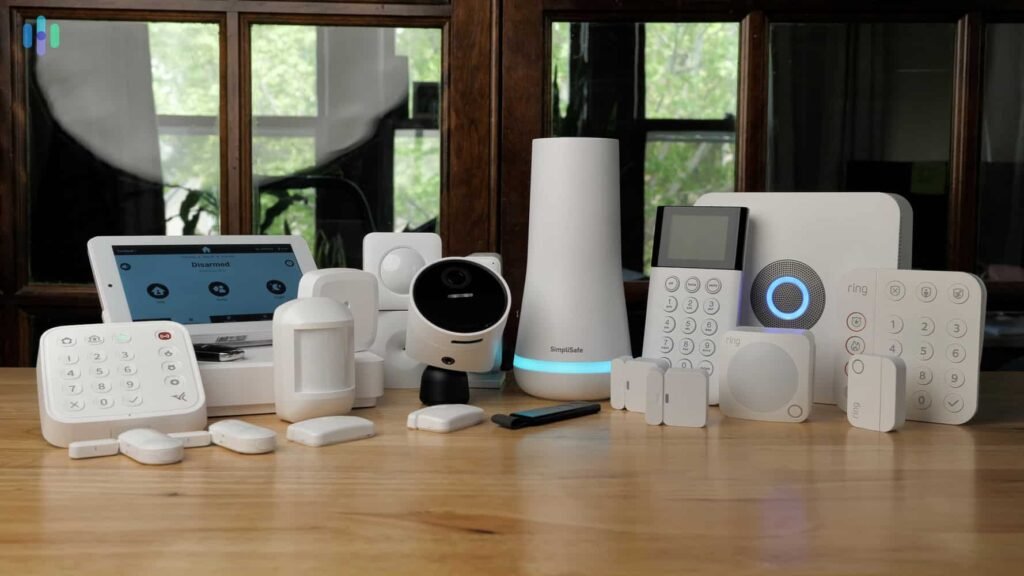
This is the allure of digital convenience. It is the feeling of a door unlocking as you approach without touching a key, or a playlist that knows your mood before you hit play. We don’t see the surveillance; we only feel the lack of friction. This addiction to “one-click” living turns a simple password or a typed address into an intolerable burden.
Jeremy Bentham designed the Panopticon in 1791, a prison where one guard could watch every inmate without being seen. Bentham sought total behavioral control through the mere possibility of sight. Today, that structure is virtual. We have entered what sociologist Zygmunt Bauman described in his 2002 work Liquid Modernity as a “Velvet Prison.” In this system, the walls are made of luxury and seamless interfaces. The captive forgets they are being watched because the surroundings are too comfortable to resent. We buy these walls and install them in kitchens or strap them to our wrists.
The trade is simple. Private boundaries are surrendered to avoid the effort of existing. When the cost of ease is a permanent record of every whisper and movement, the goal is not productivity. It is predictability.
The machinery of this trade began long before the first app.
The Dopamine Loop Driving Convenience and Mass Surveillance Psychology
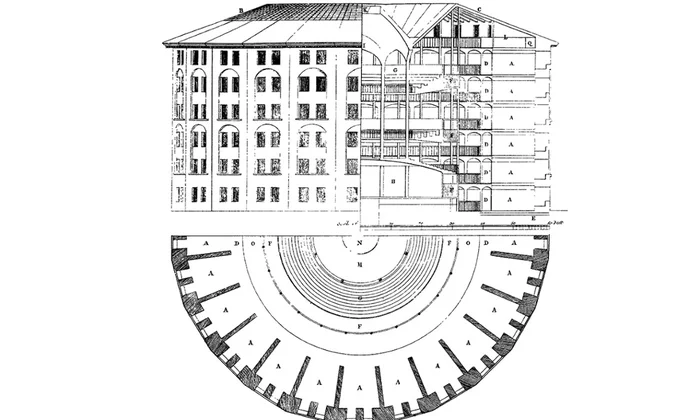
A central tower rises above a ring of backlit cells. In the darkness of the perimeter, prisoners cannot see the guard. But the guard sees everything. In 1787, Jeremy Bentham detailed this architectural trap in Panopticon; or, The Inspection-House. He didn’t just build a prison; he engineered a state of conscious and permanent visibility. The inmates didn’t need a chain to stay in line. They only needed the suspicion that a pair of eyes was watching from the tower.
Today, that tower is in your pocket. When a 2024 smartphone predicts your next word or a map reroutes you around a crash, the brain receives a hit of dopamine. This is the engine of mass surveillance psychology. We aren’t dragged into the system. We walk in because the door is open and the air conditioning is on.
Physical friction—the effort of memorizing a 10-digit phone number or unfolding a paper map—has vanished. It is replaced by a seamless stream of data extraction. Every time a device removes a three-second hurdle, the brain registers a win. That win is a distraction. While we enjoy the lack of effort, the system maps our behavioral patterns with surgical precision.
The virtual Panopticon doesn’t need walls. It uses the promise of a frictionless life to make us voluntary participants in our own monitoring.
By 2023, the average smartphone user interacted with their device over 2,600 times a day. Each tap is a data point. The cost is a new, visceral exhaustion. Privacy now feels like a chore—like scrubbing a floor by hand or walking three miles to a library just to find one fact. The annoyance of a slow process now outweighs the dread of being watched.
Why Your Smart Home Is a Panopticon You Paid To Install
luxury, not a right.
Jeremy Bentham sketched the Panopticon in 1787. He designed a circular prison where one guard could observe every inmate without the inmates knowing if they were being watched. Bentham’s obsession was not just control, but efficiency; he believed the “apparent omnipresence” of the gaze would create a state of conscious and permanent visibility. Because they feared a gaze they could not see, the inmates policed themselves. They became their own jailers.
In a 2024 living room, an Amazon Echo sits on a mahogany side table. It is a grey cylinder, not a prison tower, but the psychological mechanism is the same. Knowing a device listens for a wake word shifts behavior. People do not stop talking, but they subconsciously edit their speech. They avoid certain words and temper their tone.
This is how convenience and mass surveillance psychology work. No dictator forced people into the cell; they bought the cell on Black Friday. They installed microphones in bedrooms and cameras at front doors because turning on a light switch felt like too much effort.
The modern Panopticon isn’t a building of stone and iron. It is a network of invisible sensors that we voluntarily integrate into our most private spaces.
The trade is a few seconds of saved effort for a permanent record of existence. In 1787, the prisoner was a captive. Now, the captive is a consumer. People pay a monthly subscription to be monitored. The guard is no longer a man in a uniform, but an algorithm in a Northern Virginia server farm processing every breath for a targeted ad.
The Quiet Erosion of Agency in Convenience and Mass Surveillance Psychology
Jeremy Bentham sketched the first Panopticon in 1787. He designed a circular prison where one guard could watch every inmate without the inmates knowing they were being observed. The prisoner began to police himself. This is the basis of convenience and mass surveillance psychology. The guard has moved from a central tower into the silicon chips in our living rooms.
In 2018, Amazon expanded the Ring doorbell network, creating a privatized surveillance grid across thousands of American suburbs. Users feel secure, but the result is a distributed Panopticon. Choosing a voice-activated light over the privacy of a conversation is not just buying a tool; it is installing a behavioral modifier.
The shift is slow. People stop doing things because a record exists. They sanitize their movements and speech. This is not a sudden crackdown by a state actor, but a voluntary surrender. This mirrors the “Cold War” psychology of the Stasi in East Germany, where the most effective tool of control wasn’t the secret police, but the Zersetzung the psychological decomposition of the individual through the mere suspicion that a neighbor or spouse might be an informant.
The modern Panopticon is virtual. It lives in GPS pings and browsing histories, turning the consumer into their own jailer.
The psychological cost is the loss of “backstage” space. Sociologist Erving Goffman argued that humans need a private area to drop social masks. Without it, personality flattens. People become performers in their own homes. They refine their lives for the algorithm and forget how to exist without an audience. This is the hidden tax on convenience and mass surveillance psychology. The freedom of being unseen was traded for a smooth life. The walls closed in, but they were painted a sleek, minimalist white.
Who Profits When We Stop Noticing the Watchers
George Orwell imagined a boot stamping on a human face in 1948. He missed the more likely outcome: a velvet glove offering a discount code. Profit from convenience and mass surveillance psychology is more than financial; it is the acquisition of behavioral predictability. When a company knows when you wake up, who you text, and where you stand in a store, they aren’t just selling ads. They are selling the ability to steer your future choices.
Shoshana Zuboff coined the term “surveillance capitalism” in 2019 to describe a model that treats human experience as free raw material. This material becomes “prediction products” traded in a marketplace. The winner is not the person with the best product, but the entity with the most data.
The goal is no longer to understand the user, but to automate their behavior through constant, invisible feedback loops.
This shift creates a power asymmetry. A 2021 study on “dark patterns” in user interfaces showed how design choices—such as hidden unsubscribe buttons or countdown timers trick users into giving up more data than they intended. These are not accidents; they are psychological triggers. They are the digital descendants of the “carnival game,” designed with a tilt that makes the win feel possible while ensuring the house always collects.
Profit comes from eroding the “will.” If an algorithm predicts your mood before you feel it, it can suggest a purchase or a political opinion that fits that mood. You feel agency, but the options were pre-selected. This is the basis of convenience and mass surveillance psychology: the feeling of freedom while walking a path someone else paved. The watchers don’t need chains when they own the map.
Is the Comfort of the Algorithm Worth the Death of the Private Self?
That agency is a ghost. A server in Virginia made the real choice three seconds before you blinked. This is where digital surveillance transforms from a tool into a psychological cage, fueled by convenience and mass surveillance psychology. We trade the friction of autonomy for a predicted life. When the environment adapts to us, we stop questioning why it knows us.
The danger exceeds a simple breach of data privacy. It is the erasure of the “unobserved self.” Without a space where we are not tracked or nudged, we cannot experiment. We become static versions of our past data points. Algorithmic bias doesn’t just steer our shopping; it freezes our identity. The code does not want you to grow. It wants you to be predictable.
How Social Media Algorithm Manipulation Psychology Rewires Choice
We now live in a virtual Panopticon. In 1787, Jeremy Bentham detailed this in Panopticon; or, The Inspection House. He didn’t just design a building; he designed a psychological trap. In the original prison, a single guard could see everyone, but no one could see the guard. Today, the guard is a silent line of code. This “code-guard” doesn’t just watch; it anticipates. Shoshana Zuboff describes this as “surveillance capitalism,” where our internal experiences are mined for behavioral futures. Gilles Deleuze argued we moved from these enclosed prisons into “societies of control,” where the walls are invisible and the locks are digital.
Comfort is a sedative. It numbs the instinct to rebel and makes invisible walls feel like a warm embrace, a byproduct of convenience and mass surveillance psychology. If the price of a smooth life is the erasure of the internal world, we must ask what is actually being improved. We are not the customers of these systems. We are the raw material.
Is this a threat or an opportunity? Tell us what you think.
How Your Data Fuels Tech Giants and What You Can Do
Frequently Asked Questions
Q: What is the connection between convenience and mass surveillance psychology?
A: The link between convenience and mass surveillance psychology lies in the “trade-off” mechanism where users willingly exchange private data for immediate utility. When a service removes a friction point—like remembering a password or typing an address—the brain prioritizes the reward of ease over the abstract risk of data collection. This psychological loop makes surveillance invisible because the benefit is felt instantly, while the cost is deferred and hidden.
Q: Why does the trade-off for digital convenience matter for personal privacy?
A: Understanding convenience and mass surveillance psychology matters because it shifts surveillance from something imposed by the state to something invited by the consumer. In 1948, George Orwell imagined a “Big Brother” who forced compliance through fear. Today, surveillance is voluntary. By optimizing for seamless experiences, tech companies create a digital architecture that tracks movements and thoughts without the user ever feeling the need to resist or question the intrusion.
Q: Is it a misconception that using “incognito mode” stops mass surveillance?
A: A common misconception regarding convenience and mass surveillance psychology is that privacy tools like incognito mode provide total anonymity. While these modes stop local browser history from saving, they do not stop server-side tracking or ISP logging. The “convenience” of a one-click privacy setting creates a false sense of security, which actually encourages users to share more data under the mistaken belief that they have successfully opted out of the system.
Q: How does the history of the Panopticon relate to modern data collection?
A: Jeremy Bentham designed the Panopticon in 1787 as a prison where one guard could observe all inmates without them knowing if they were being watched. Modern convenience and mass surveillance psychology apply this principle to the internet. We are not locked in a cell, but we behave as if we are being watched because our devices are always active. The result is “social sorting,” where we self-censor our behavior to fit the algorithms’ expectations.
Q: What is a surprising fact about how “free” apps use surveillance?
A: A surprising reality of convenience and mass surveillance psychology is that “free” services are often more invasive than paid ones because the user is the product. For example, a free flashlight app from 2015 might request access to a user’s contact list and GPS location to sell that data to brokers. The psychological lure of a zero-dollar price tag blinds the user to the fact that they are paying with the most valuable currency available: their behavioral data.

