


The Convenient Lies We Call Science Education Myths
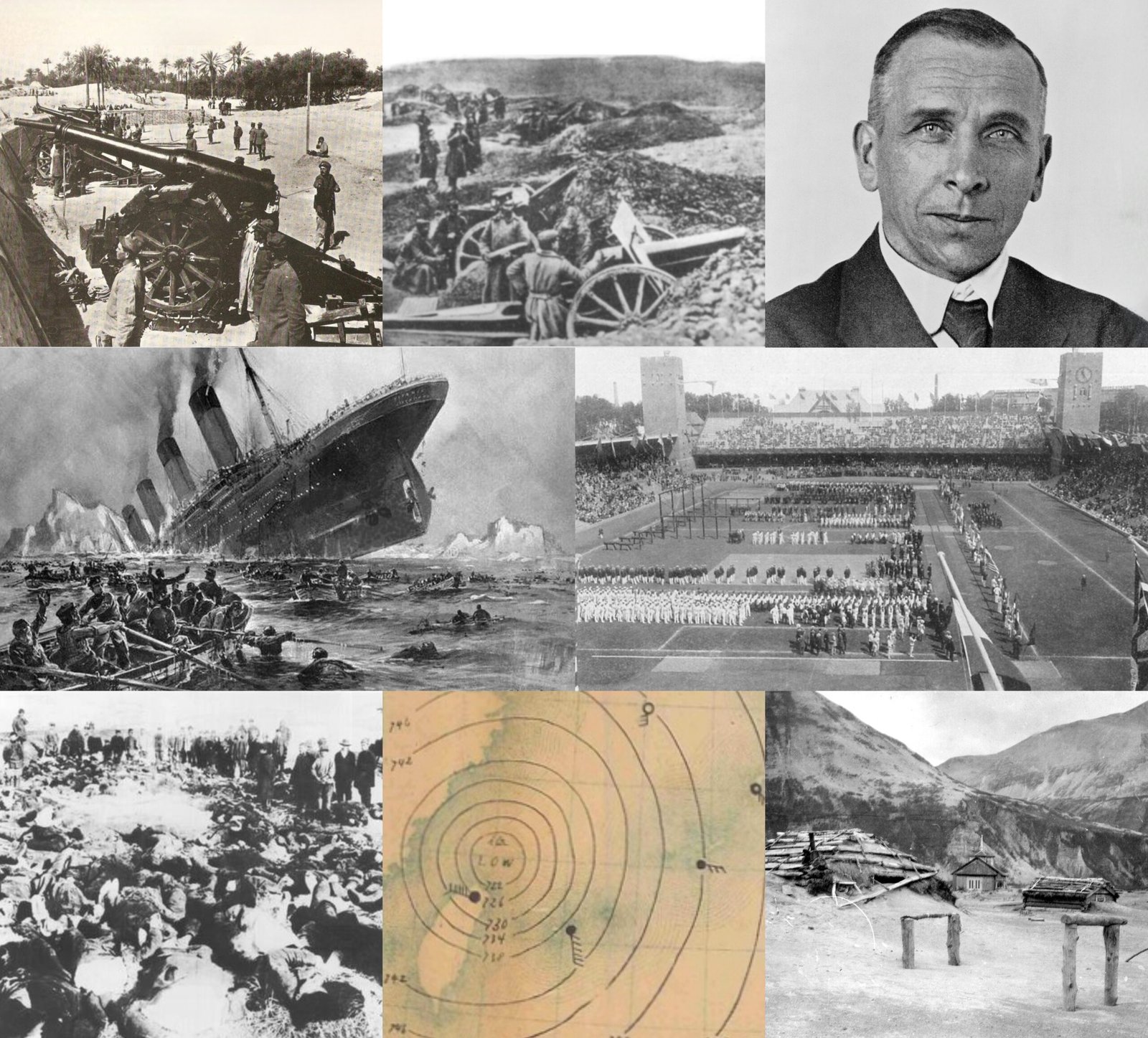
In 1912, Alfred Wegener presented The Origin of Continents and Oceans, proposing that Earth’s landmasses once formed a single supercontinent. The academic establishment didn’t just disagree; they ridiculed him for decades. Yet, most classrooms today present plate tectonics as a sudden, clean epiphany. This is the “textbook effect”: we trade the sensory chaos of scientific struggle for a polished dogma, creating deep science education myths and misconceptions. We replace the smell of ozone and the frustration of failed experiments with a scripted result. This sanitization transforms science from a volatile process of discovery into a linear march toward truth. It hides the friction of progress. The first of these science education myths is the most dangerous because it defines the entire process.
Why Your Textbook Prefers Science Education Myths Over Complexity
The laughter was visceral. In 1912, Alfred Wegener proposed a radical idea: the continents were drifting. He detailed this in his 1915 work, The Origin of Continents and Oceans. Because Wegener was a meteorologist and not a geologist, the establishment didn’t just disagree. They attacked his credentials.
This hostility wasn’t about the scientific method. It was about professional borders. When textbooks erase this friction, they replace human ego with a sanitized, linear progression. This systemic erasure turns science into a series of inevitable victories rather than a brawl of ideas.
In 1992, researchers Lawson and Lawson analyzed biology textbooks. They found that pedagogical narratives stripped away the actual cognitive struggle of scientists.
Textbooks often replace the chaotic process of discovery with a polished, inevitable sequence of events.
By removing the conflict, we teach students that science is a collection of settled facts. It isn’t. It is a series of arguments. This sanitization reinforces science education myths by hiding the people behind the data.
The Hidden Cost of Simplifying the Scientific Method
The year was 1992. William McComas sat in a biology lab. He watched a researcher stare at a petri dish. It defied every prediction in the manual. The textbook on the desk promised a linear path: observation, hypothesis, experiment, conclusion. The reality was a chaotic loop of contradictions and dead ends.
[IMAGE PLACEHHOLDER: A cluttered laboratory bench contrasting a clean scientific method flowchart]
This “recipe” approach to the scientific method mirrors the 1890s obsession with Mechanical Objectivity and common science education myths. Theorists like Lorraine Daston argue that this era sought to erase human intuition entirely. They believed truth emerged automatically from data. It was devoid of a witness. By teaching science as a sterile sequence, we remove the intellectual tension required for critical thinking.
The nature of scientific thinking is far more complex than the rigid steps taught in most secondary schools.
These science education myths erase the struggle. Discoveries feel inevitable rather than hard-won.
Who Benefits When We Stop Questioning the Basics?
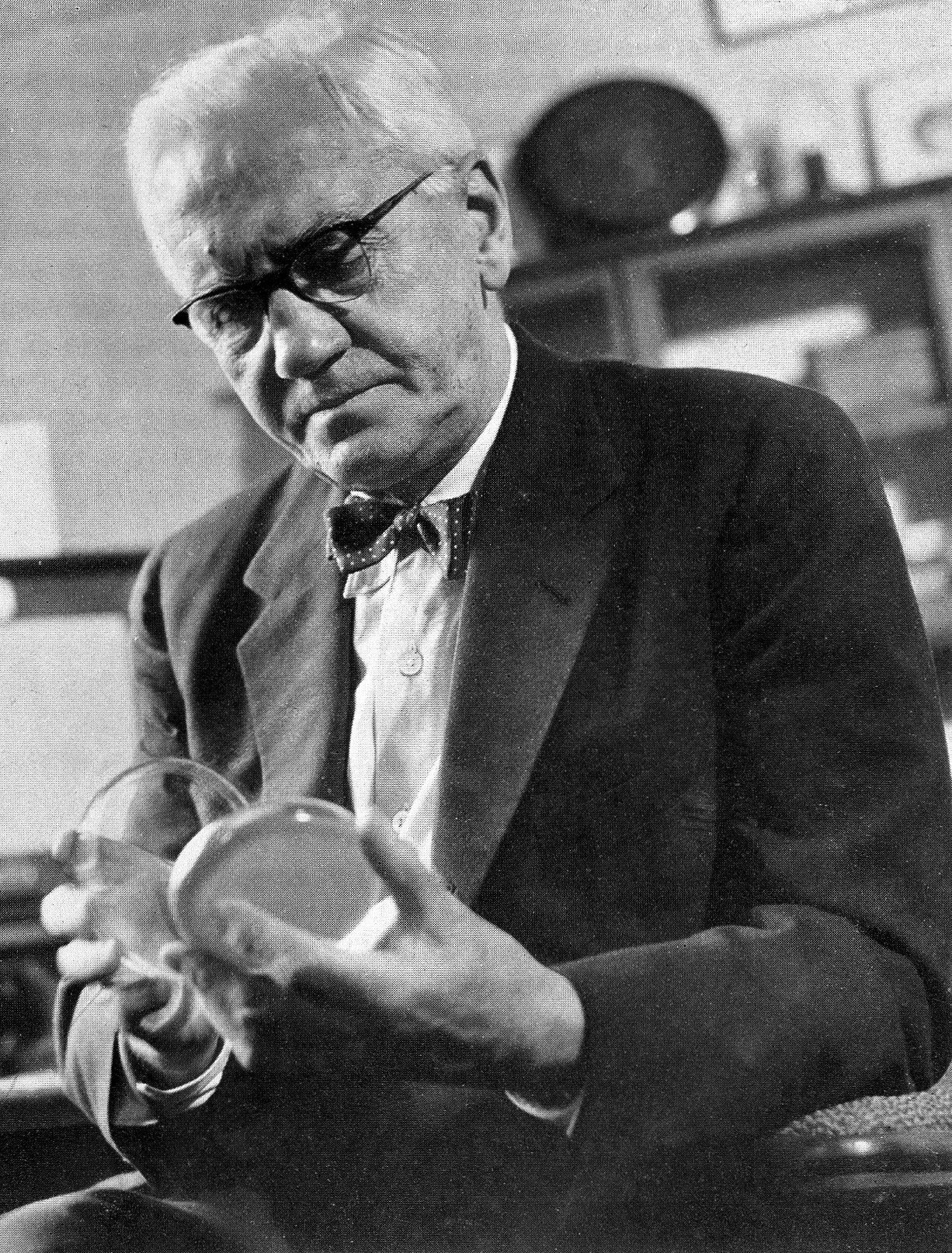
September 1928. Alexander Fleming returned to his cluttered laboratory at St. Mary’s Hospital in London. He found a petri dish of Staphylococcus contaminated with a stray mold spore. The mold had created a clear ring where the bacteria simply vanished. This wasn’t a disciplined flowchart; it was a fortunate accident.
The records of his discovery reveal a messy reality that textbooks often erase. When we scrub these anomalies, we trade scientific inquiry for a sanitized narrative. This process strips away the critical thinking skills required to challenge a consensus. By presenting the nature of science as a straight line, we teach students to obey a result rather than interrogate the process, reinforcing common science education myths.
William McComas argued in his 1992 analysis that these science education myths stifle intellectual growth. When science is taught as a closed book of settled facts, the skepticism that drives actual progress disappears. If the basics are beyond question, curiosity dies. This systemic desire for certainty doesn’t just simplify the curriculum—it protects the status quo from the very doubt that makes discovery possible.
Frequently Asked Questions
Q: What are the most common science education myths?
A: Common science education myths include the idea that humans only use 10% of their brains or that blood is blue inside the body. These misconceptions often persist because they simplify complex biological processes for younger students. In reality, neurological imaging shows that nearly every part of the brain remains active throughout the day. These errors linger in classrooms because they are easier to visualize than the actual, more complex scientific mechanisms.
Q: Why do science education myths persist in schools?
A: Many science education myths persist because textbooks often prioritize a simplified narrative over technical accuracy. Educators frequently use “white lies” to make abstract concepts, like the Bohr model of the atom, easier for children to grasp. By the time students reach university, these mental shortcuts have hardened into “facts.” This creates a gap between academic instruction and current research, making the eventual correction feel like a contradiction rather than an evolution of knowledge.
Q: Is the “tongue map” one of those science education myths?
A: The belief that different zones of the tongue taste specific flavors is one of the most enduring science education myths. For decades, students were taught that sweetness is felt at the tip and bitterness at the back. However, researchers like Victor McDonald proved that taste receptors are distributed across the entire tongue. This myth originated from a 1901 paper by David Hanig {a mistake in translation}, which was then blindly repeated in textbooks for nearly a century.
Q: How do science education myths affect our understanding of history?
A: Certain science education myths distort our view of discovery by framing progress as a linear path led by a few “genius” individuals. We are often taught that the Scientific Revolution began abruptly in Europe during the 16th century. This ignores the critical role of the House of Wisdom in Baghdad and scholars like Ibn al-Haytham. By erasing these contributions, the education system suggests that scientific inquiry was a Western invention rather than a global, cumulative effort.
Q: What is a surprising example of science education myths regarding gravity?
A: A surprising example of science education myths is the story of the apple falling on Isaac Newton’s head. While Newton did observe falling apples in 1666, there is no historical evidence that one actually hit him. This anecdote transforms a rigorous mathematical process into a “eureka” moment of luck. It reinforces the false idea that scientific breakthroughs happen through sudden flashes of insight rather than years of tedious calculation and observation.

