


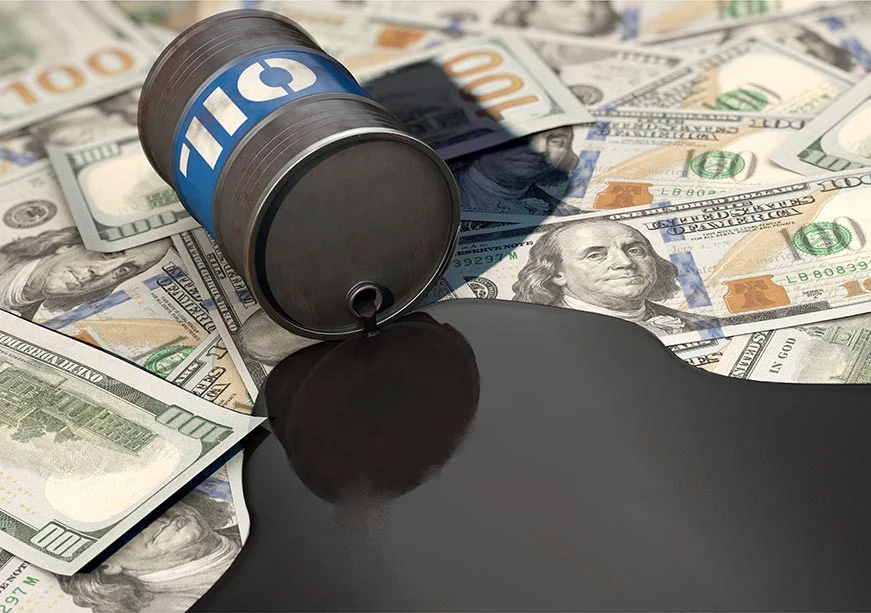
The 1974 Handshake That Redrew the World Map
Global trade is not about oil; it is about the permission to exist.
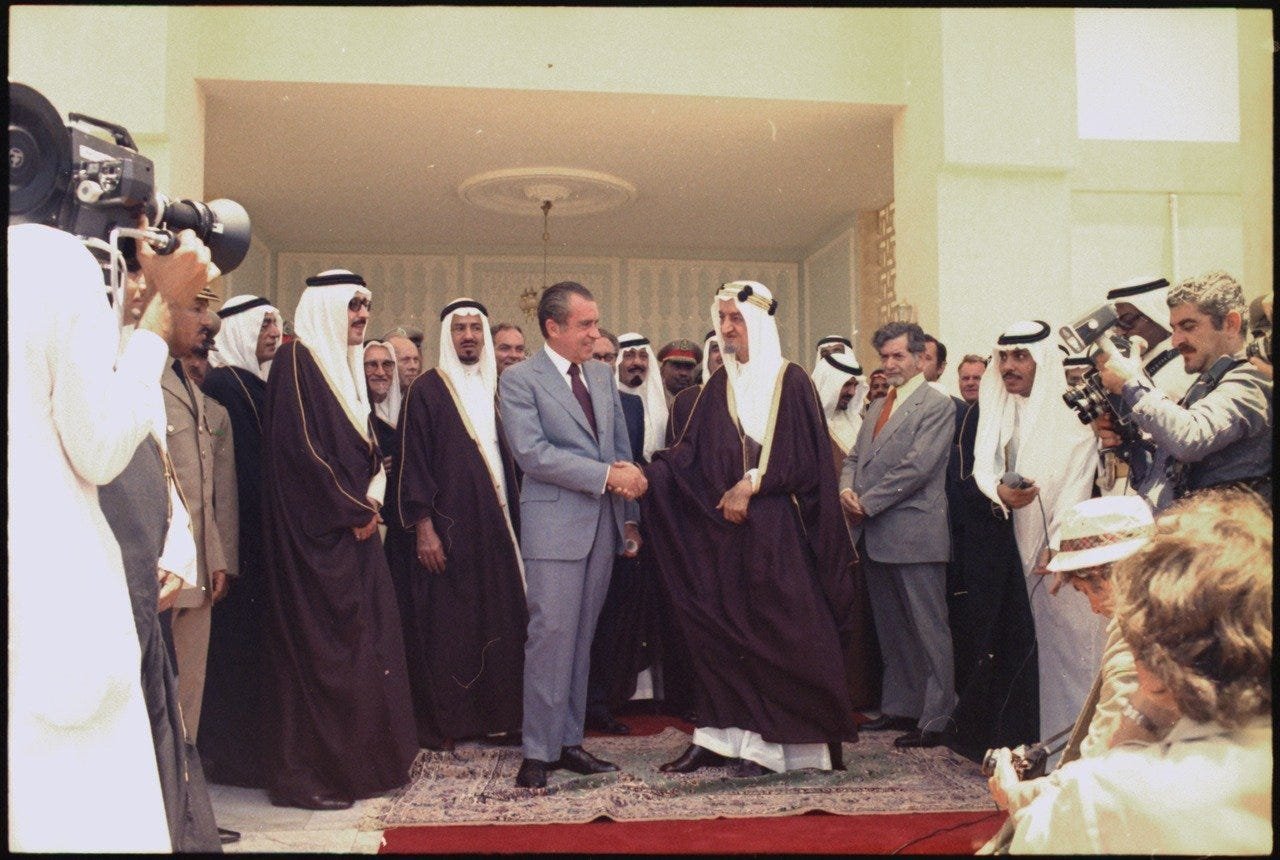
In 1974, in a room in Riyadh, Henry Kissinger and King Faisal made a deal. Saudi Arabia would price its crude oil only in US dollars. In return, the United States provided military protection and stability. This created the petrodollar system. To seal the pact, the US didn’t just offer missiles; they offered the “security of the throne,” effectively transforming the House of Saud into the global custodian of the dollar.
The process is blunt. If South Korea wants crude from the UAE, it cannot use won. It must sell its own currency to buy US dollars. This creates a constant, artificial demand for the greenback. Nations must stockpile dollars to maintain their energy supplies. This gives Washington power that exceeds any army. By controlling the currency of energy, the US taxes the global economy without passing a law.
This system is not an economic law. It is a cage, and the bars are rattling.
How the Petrodollar System and Global Political Influence Became Invisible
Riyadh, 1974. Behind closed doors, a few men finalized a pact that would quietly rewire the global economy. The air was thick with the tension of the 1973 oil embargo, which had just crippled Western energy supplies. In a series of clandestine meetings, the U.S. and Saudi Arabia forged a handshake agreement. The terms were simple: Saudi Arabia would price all oil exports in U.S. dollars and recycle its surpluses into U.S. Treasuries. In return, Washington guaranteed military hardware and security.
This is essentially how the petrodollar works. By tying the world’s most essential commodity to a single currency, the U.S. created an artificial, permanent demand for the dollar. If South Korea buys crude from the UAE, it cannot use the won. It must first acquire dollars.
The dollar became the only currency that mattered because it was the only currency that could buy energy.
This mirrors the “Company Store” model of 19th-century mining towns, where workers were paid in scrip usable only at the employer’s store. Documentation in the Foreign Relations of the United States archives confirms this strategic alignment. It allows the U.S. to run massive deficits because the world is forced to hold its debt.
The Saudi Reciprocity Pact: Security for Sovereignty
The air in the meeting room was thick with tension in 1974. King Faisal sat across from U.S. officials, weighing the survival of the House of Saud against the demands of Washington. The deal was cold and transactional. The U.S. would provide advanced weaponry and ironclad security guarantees. In exchange, Riyadh would price every barrel of oil in U.S. dollars. This agreement cemented the petrodollar system.
By forcing every oil-importing nation to hold dollar reserves, the U.S. created an artificial, permanent demand for its currency. Washington could now run massive deficits without triggering hyperinflation. Riyadh recycled its oil profits directly back into U.S. Treasuries. This financial loop mirrored the tributum system under Emperor Augustus. Specifically, the province of Egypt paid heavy taxes in gold and grain to Rome. The Empire then spent that same wealth to fund the legions guarding the Egyptian border.
The deal turned the U.S. dollar into the world’s indispensable asset. It effectively outsourced the cost of American empire to the global oil market.
The U.S. military became the silent guarantor of the Saudi throne. This tethered the monarchy to Western financial stability. For decades, crude prices remained the primary lever of the petrodollar system. Any threat to the dollar was a threat to global energy.
Exporting Inflation: Why the Rest of the World Pays the US Debt
In 1974, a South Korean trader buying crude from the UAE could not use won. He sold his currency for US dollars. This created a permanent drain, pulling global wealth into US Treasury bonds.
When Saudi Arabia sells oil for dollars, it recycles that cash into US government debt. This allows the American state to spend far beyond its means. The US prints paper; the world trades real assets to hold it. This mirrors the 16th-century Spanish Empire. After 1500, Spain flooded Europe with New World silver, triggering the Price Revolution. This surge of bullion eroded purchasing power across every kingdom that accepted the metal.
The US essentially exports its inflation. By pricing oil in dollars, the US forces other nations to absorb the falling value of the dollar to maintain their own energy security.
Trillions of new dollars dilute the currency’s value. Every nation needs oil, so every nation must hold these depreciating notes. The US spends, and the rest of the world pays the inflation tax. This isn’t an accident. It is the core engine of the petrodollar system.
Weaponizing the Swift Code and the Architecture of Exclusion
The Society for Worldwide Interbank Financial Telecommunication (SWIFT) started in Brussels in 1973. It began as a messaging system to replace the clatter of telex machines. By the 1980s, the petrodollar system and global political pressure turned this utility into a gatekeeper. Nations buying oil from Saudi Arabia need more than dollars; they need access to the SWIFT network to move those funds.
When the U.S. Treasury labels a regime “rogue,” it removes the target from the SWIFT directory instead of using military force. This causes an immediate financial blackout. It is the modern equivalent of the 19th-century “Continental Blockade,” where Napoleon attempted to bankrupt Britain not by invading London, but by banning them from every European port.
A country can hold billions in gold or oil, but if it cannot send a digital message to a bank in New York, its wealth is functionally invisible.
This system ensures the petrodollar and global political influence stay in place. In 2012, the EU disconnected Iranian banks from SWIFT under U.S. pressure. The Iranian economy was severed from global trade overnight. The cage is made of code, not iron.
The Petrodollar System and Global Political Influence in the Age of BRICS
In 2022, Saudi Arabia informed Washington it would consider oil payments in Chinese yuan. This challenged the petrodollar system, a regime codified in 1974 through a diplomatic pact between Henry Kissinger and King Faisal. According to U.S. National Archives records, this agreement ensured oil was priced in dollars in exchange for U.S. military protection. For five decades, the U.S. Treasury relied on “petrodollar recycling.” Oil exporters bought American bonds to store surplus cash, which kept U.S. interest rates low and funded massive deficits.
The BRICS bloc is now actively dismantling this loop. Rather than relying on a static alliance, China is expanding the Cross-Border Interbank Payment System (CIPS) to settle trades in yuan. Russia has pushed the SPFS system to bypass the Western-led SWIFT network. India is negotiating bilateral agreements to settle crude imports in rupees.
The mechanism is simple: if a nation sells oil in yuan or rupees, the demand for the dollar drops. The U.S. loses its ability to weaponize the financial system through sanctions.
When South Korea buys crude from the UAE, they must sell won to get dollars. This friction is the cost of American dominance. As these nations adopt local currencies, the petrodollar system weakens.
[INTERNAL LINK: How the petrodollar system affects global inflation]
De-dollarization or Just a Different Set of Chains?
June 1974. Henry Kissinger landed in Riyadh with a singular, desperate objective. The US dollar was reeling from the 1971 Nixon Shock, and Washington needed a stabilizer. Kissinger struck a secret bargain: the US would guarantee Saudi security in exchange for the Kingdom pricing all oil exports exclusively in dollars. This agreement, codified in the U.S.-Saudi Arabian Joint Commission frameworks, birthed the petrodollar. It ensured that every nation needing energy first needed dollars.
This system created a forced global demand. When South Korea trades with the UAE, Seoul cannot use the won. They must sell their currency to buy US dollars first. This mechanism allows Washington to run massive deficits without triggering immediate inflation. It functions as a hidden tax on every sovereign state.
The dollar is not just a currency; it is a tool of geopolitical power that forces the world to fund American debt to keep the lights on.
Now, the trend of de-dollarization is accelerating. In 2022, Saudi Arabia signaled it would consider other currencies for oil. China and Russia have already pivoted to the yuan and ruble. The risk is stability. Most global reserves remain in US Treasuries. A sudden collapse could trigger contagion. The question is whether the world seeks a multipolar economy or simply a new master.
The Fragility of a Trust-Based Empire
August 15, 1971. Richard Nixon sat before a television camera and told the world the U.S. would no longer exchange dollars for gold. In an instant, the “gold window” slammed shut. The global economy shifted from a tangible anchor to a promise. By 1974, a secret agreement with the House of Saud ensured oil was priced exclusively in dollars. This created the petrodollar system, a mechanism that forced every nation—from South Korea to Brazil—to hoard U.S. currency just to keep the lights on.
The U.S. now funds its military and bureaucracy by printing money that the world is compelled to buy. It is a closed loop of artificial demand.
This reliance on perceived value is dangerous. It mirrors the collapse of the Spanish Empire under Philip II. Records from the Casa de Contratación show that while Spain flooded its markets with New World silver, it failed to build a productive economy. The result was the “Price Revolution,” a period of runaway inflation that erased Spanish hegemony by 1600.
The global economy became a closed loop where the U.S. prints the currency that the rest of the world is forced to hoard to survive.
Trust is a volatile asset. When the U.S. froze $300 billion in Afghan reserves in 2021, the risk became tangible. Central banks in Beijing and Moscow reacted by buying gold. The petrodollar system survives only as long as the dollar is viewed as the only safe harbor. If that belief breaks, the empire follows the silver.
Who Actually Holds the Keys to the Quiet Cage?
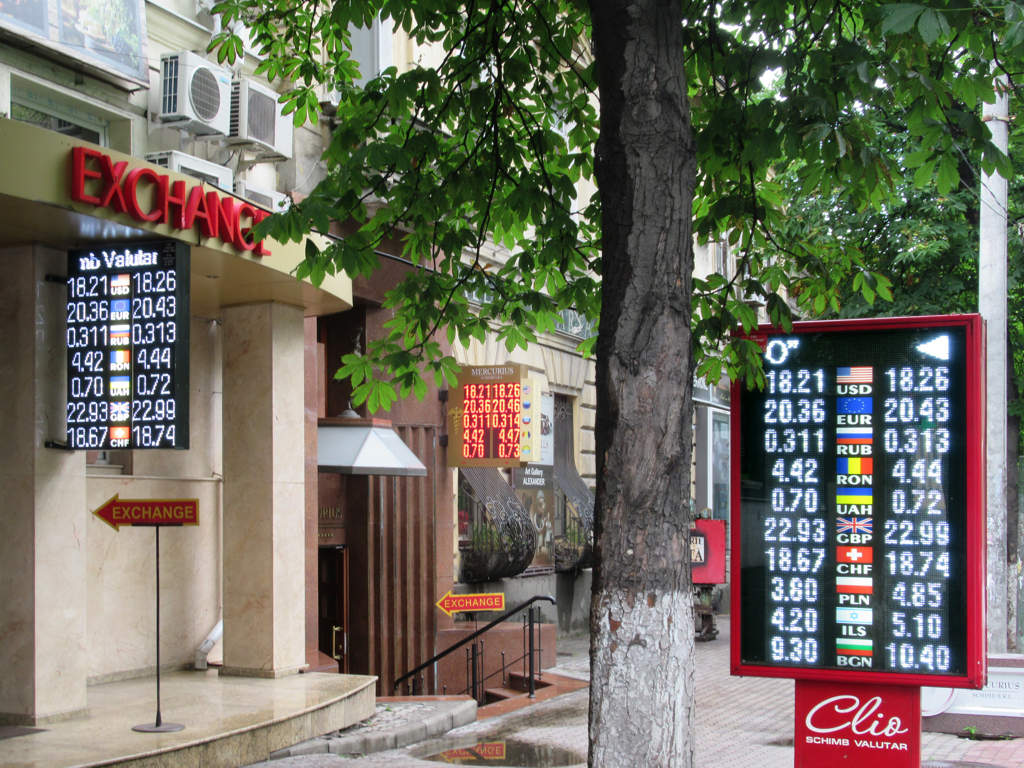
A trader in Seoul stands before a digital screen in 2024. To buy a shipment of crude from the UAE, he cannot use won. He must first sell his national currency to acquire US dollars. This isn’t a choice; it is a requirement of the petrodollar system.
This mechanical exchange is the heartbeat of US hegemony. It began in earnest with the 1974 US-Saudi Arabian agreement. Under this deal, King Faisal and US officials ensured that oil would be priced exclusively in dollars. In return, the US provided military security.
“The world is essentially operating under a ‘Company Store’ model. The US provides the security and the currency, but the world accepts a ledger where Washington can run massive deficits and export inflation to everyone else.” — The Price of Time: The Real Story of Debt
This arrangement created a strategic lock. The US Treasury became the world’s indispensable ledger. However, the era of unquestioned dominance is fading. The rise of de-dollarization is no longer a theory. At the 2024 BRICS summit in Kazan, leaders explicitly discussed trading in local currencies. By shifting to yuan or rupees, nations are picking the lock of the quiet cage.
Frequently Asked Questions
Q: What is the petrodollar system and global political influence?
A: The petrodollar system and global political influence describe a framework where oil is priced and traded exclusively in US dollars. This arrangement forces every nation to hold USD reserves to buy energy. By creating a permanent, global demand for the dollar, the United States can run massive deficits and maintain a dominant role in international trade and diplomacy, effectively linking energy security to American monetary policy.
Q: Why does the petrodollar system matter for national sovereignty?
A: The petrodollar system and global political influence matter because they allow the US to weaponize the financial system. Since most oil trades settle in dollars, the US can use sanctions to cut countries out of the global economy. When a nation is blocked from the dollar-based system, it cannot easily buy energy or sell exports. This transforms a currency into a tool of geopolitical control and regime pressure.
Q: Is it true that the petrodollar system is the only reason for US dominance?
A: While the petrodollar system and global political influence are central, they are not the sole drivers of US power. Military presence and technological patents also play a role. However, the common misconception is that the dollar is strong only because of the US economy. In reality, the forced demand for dollars to purchase oil provides a unique structural advantage that other currencies, like the Euro or Yuan, currently lack.
Q: How did the petrodollar system and global political influence begin?
A: The petrodollar system and global political influence were solidified in 1974 through a deal between the US and Saudi Arabia. After the 1973 oil crisis, the US agreed to provide military protection and hardware to the House of Saud in exchange for pricing oil in dollars. This ensured that “petrodollars” would flow back into US Treasuries, creating a recycling loop that stabilized the dollar after the gold standard ended in 1971.
Q: What happens if countries stop using the petrodollar system?
A: A shift away from the petrodollar system and global political influence could trigger a domestic economic crisis in the US. If oil is traded in a basket of currencies, the artificial demand for USD would vanish. This would likely lead to higher inflation and a sharp increase in borrowing costs for the US government. It would signal a transition from a unipolar financial world to a multipolar one where no single nation dictates trade.

